Little wonders.
A car whose whole front was its door, one that reversed by starting its engine backwards, one you turned round by lifting its tail: every notable microcar, in the order it appeared, from Léon Bollée’s voiturette of 1895 to the electric quadricycles of today.
- 224cars
- 28maker groups
- 131years
- 7eras
- 1,372 mmthe shortest
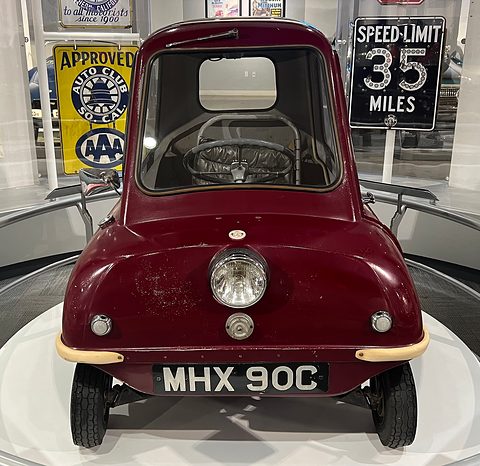 Peel P501.37 m
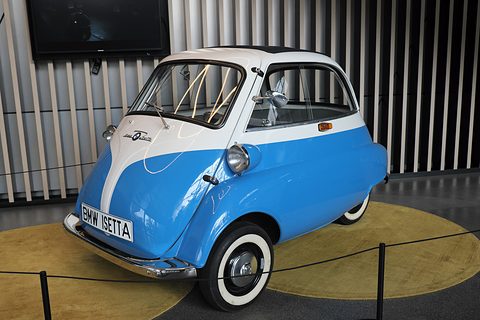 BMW Isetta2.29 m
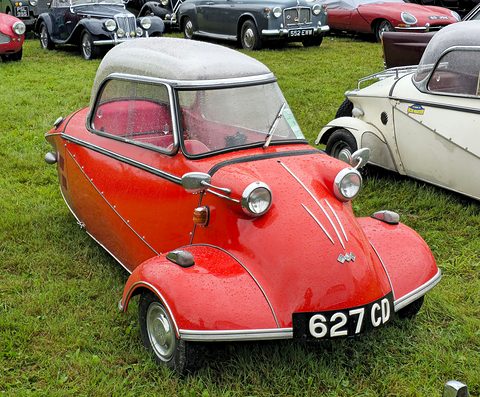 Messerschmitt KR2002.82 m
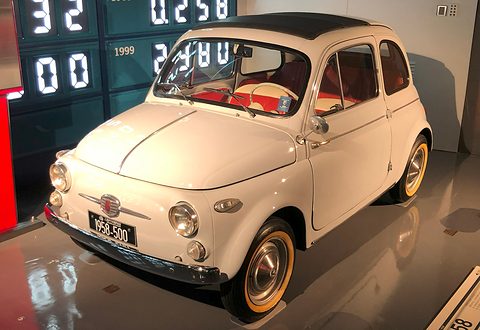 Fiat Nuova 5002.97 m
Every car is drawn to scale. Each bar is a car’s length on a 3.5 m track, and the red notch is always the Fiat Nuova 500, 2,970 mm (117 in): roughly as big as a microcar gets, with some famous exceptions. This bar is a Messerschmitt KR200, 2,820 mm.
Era 1 of 7 · 1895–1918
Voiturettes and cyclecars
In 1895 Léon Bollée built a tandem three-wheeler and registered a word for it, voiturette, a little car. The Léon Bollée Voiturette sold well, and the word outlived it, becoming the French name for any small car after it. Ettore Bugatti’s Peugeot Bébé, shown at the Paris Salon in 1912, put an 855 cc four in a car of under 350 kg.
From 1910 came the cyclecar, a light car built from motorcycle parts. The Bédélia of 1910 was steered from the back seat; the GN cyclecar began in a coach-house near Hendon. H. F. S. Morgan’s Morgan Three-Wheeler, taxed as a motorcycle, set the cyclecar hour record at Brooklands in November 1912, and at Amiens in 1913 it was first home in the first Cyclecar Grand Prix, though the cyclecar class went to a Bédélia. More than 50 American cyclecar firms were announced in 1913–14; by 1915 nearly all had been undercut by cheap proper cars, Ford’s Model T first among them.
- 14 cars
- 4 maker groups
- 3 essential
- Shortest: Briggs & Stratton Flyer, 2.34 m
- 1895
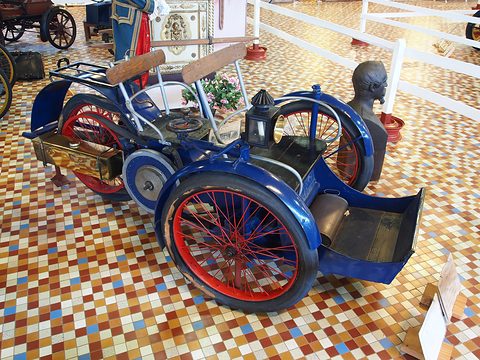
Léon Bollée Voiturette
The 1895 tandem tricar that gave the light car its French name, with the passenger sitting out in front
2.50 m - 1902
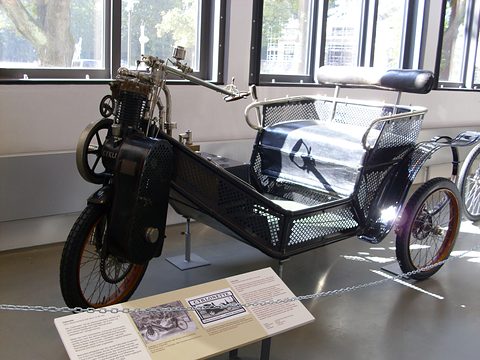
Cyklon Cyklonette
Berlin’s tradesman’s tricar, with its engine sitting on the single front wheel and driving it, built for two decades
length unknown - 1903
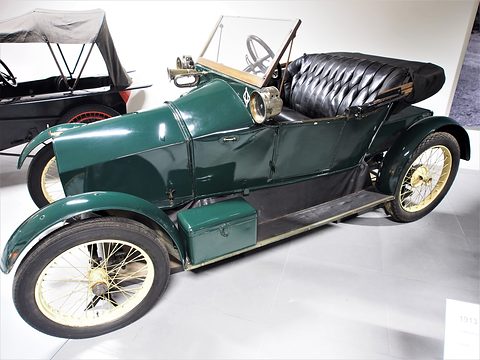
British cyclecars: the minor makers
Ten lesser British cyclecar makers, from Humber’s 1903 Humberette to the friction-drive GWK and the tiny record-breaking Jappic
- 1904
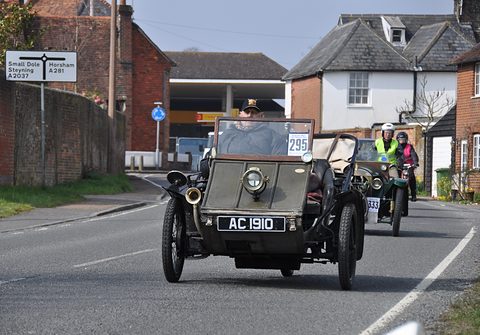
AC Sociable
A butcher’s delivery tricar with a tiller and a two-speed rear hub, from which AC Cars took its name
length unknown - 1905
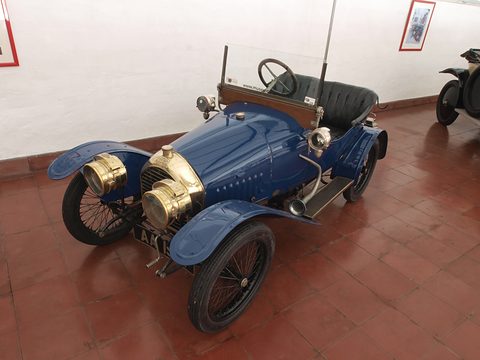
Peugeot Bébé
Ettore Bugatti’s 855 cc four-cylinder baby car, built by Peugeot: 3,095 made, more than any other Bugatti design
2.62 m - 1908
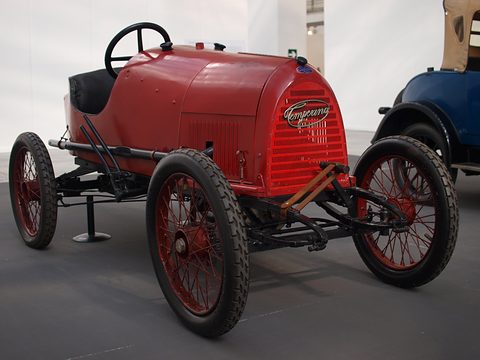
Temperino
Turin’s air-cooled V-twin light car with a dummy radiator, sold in London and climbing Alpine passes
length unknown - 1909
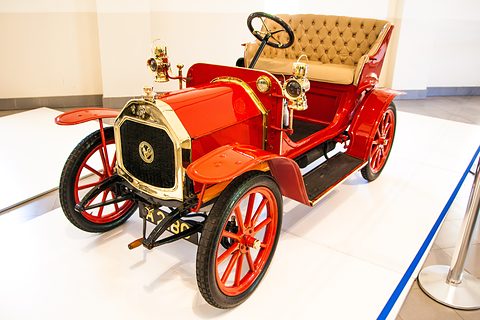
Le Zèbre
A single-cylinder two-seater for under 3,000 francs, from the men who went on to design the Citroën 5HP and found Amilcar
length unknown - 1910
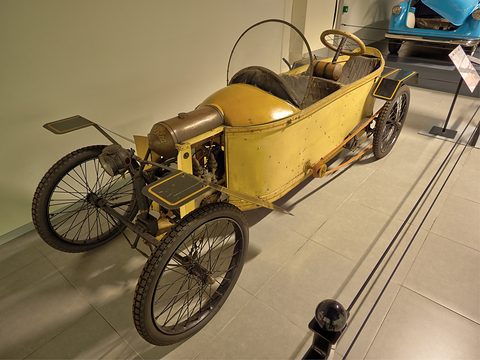
Bédélia
The archetypal cyclecar: two seats in tandem, the driver steering from the back, two long belts and no gearbox
length unknown - 1910
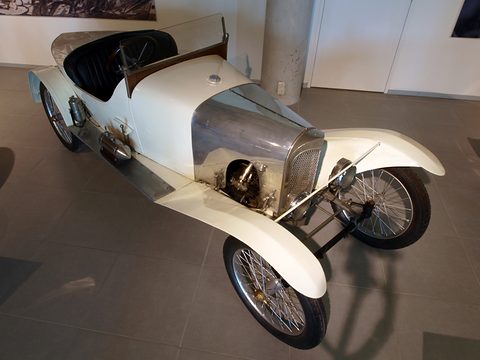
GN cyclecar
Two apprentices’ V-twin cyclecar of chains, dogs and no differential: the root of Frazer Nash and HRG, and of a generation of sprint specials
length unknown - 1910
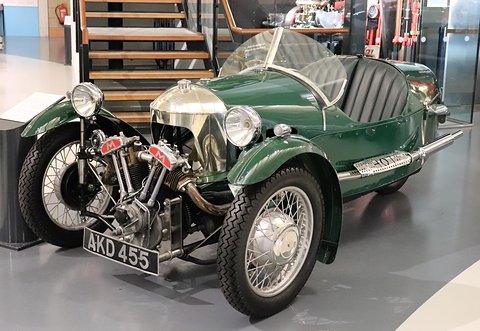
Morgan Three-Wheeler
The longest-lived cyclecar: a V-twin three-wheeler, taxed as a motorcycle, that beat cars in races, trials and records and was built for over 40 years
2.90 m - 1913
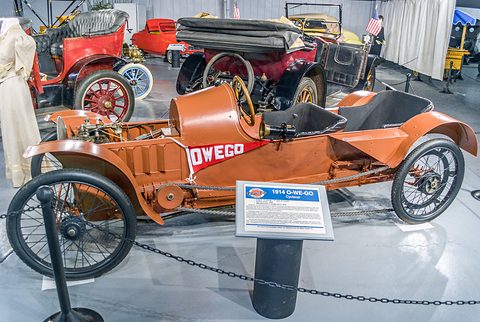
American cyclecars and small-car experiments
More than fifty American firms announced cyclecars in 1913–14, with belts, friction discs and 36-inch tracks; by 1915 almost all had gone, undercut by cheap real cars, the Model T above all.
- 1913
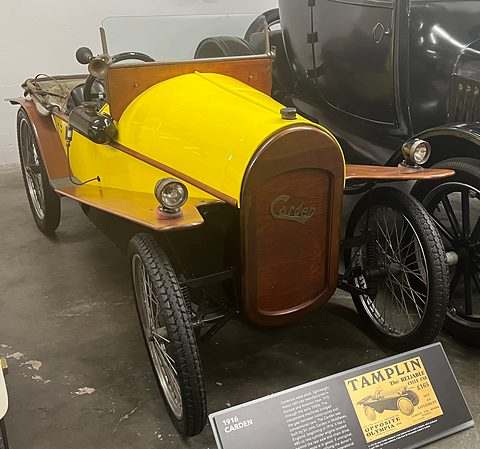
Carden cyclecar
A 21-year-old’s single-seater with its engine behind the back axle: the root of the AV Monocar and the Tamplin, by the future designer of the tankette
length unknown - 1913
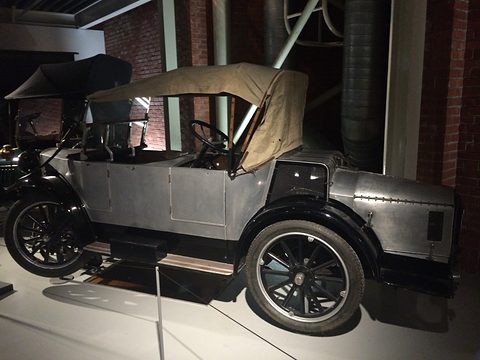
Cyclecars elsewhere: Austria, Poland, Scandinavia and beyond
The cyclecar went round the world: a Norwegian winter car on skis, a Viennese record car, a Canadian Scripps-Booth and a Polish three-wheeler of 1939.
- 1913
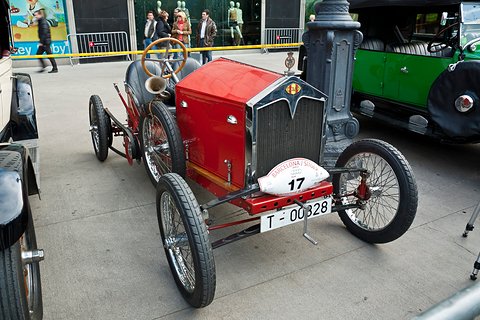
David cyclecar
Spain’s leading cyclecar, born of a bobsleigh on wheels on the Tibidabo; its makers went on to run Barcelona’s taxis
length unknown - 1913
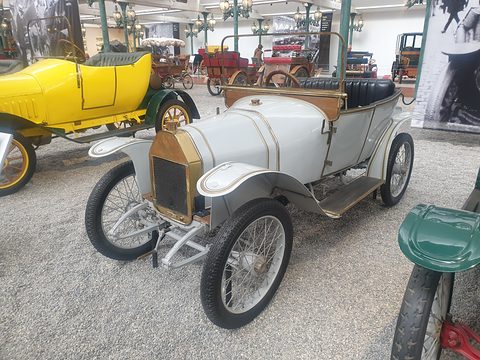
French cyclecars: the minor makers
Friction discs, expanding pulleys, an engine that steered and a car on two wheels: thirteen small French makers of the cyclecar years
- 1913
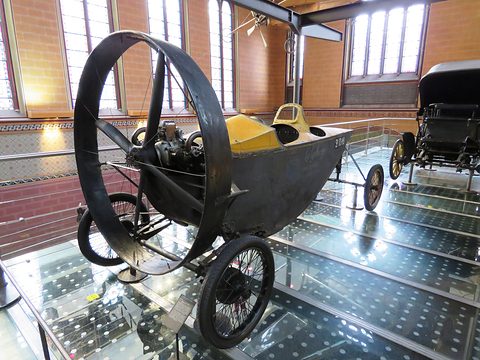
Leyat Hélica
A plywood fuselage on four wheels, pulled by a propeller: an aviator’s car with no clutch, no gearbox and no differential, steered from the back
length unknown - 1913
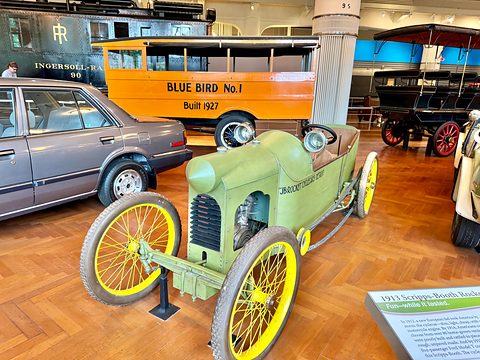
Scripps-Booth Rocket
An artist’s cyclecar: a rocket-shaped bonnet, tandem seats, belt drive with no differential and a body that was its own frame
length unknown - 1916
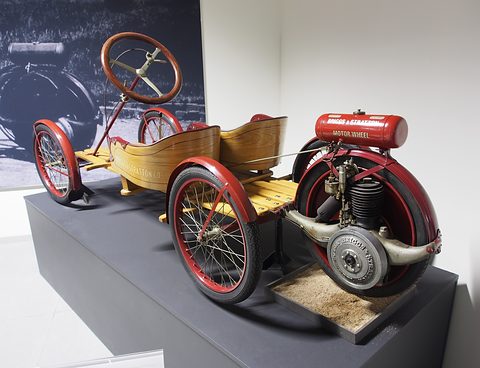
Briggs & Stratton Flyer
A slatted wooden platform pushed by a bicycle’s motor wheel: listed by Guinness as the cheapest car ever sold, and the start of Briggs & Stratton’s engine business
2.34 m
Era 2 of 7 · 1919–1939
Baby cars
Peace brought more cyclecars, and in 1920 France gave them a tax class: 100 francs a year for two seats, 1,100 cc and no more than 350 kg, a limit the Amilcar CC met only without a dynamo, a battery or a starter. In Berlin Rudolf Slaby built the Slaby-Beringer, a one-seat electric car whose wooden body was its own chassis. Then the Citroën 5HP, shown in 1921, and the Austin Seven, announced in 1922, offered a complete small car for the price of a cyclecar, and together they finished the boom.
The Seven was built under licence as the BMW 3/15, BMW’s first car, as the Rosengart LR2 in France and as the American Austin in Pennsylvania. Laws shaped the rest. A light German three-wheeler paid no vehicle tax and needed no licence, which gave Carl Borgward his first car, the Goliath Pionier; a Japanese rule of 1930 that freed cars of up to 500 cc from the driving licence gave Japan the first Datsun, the Datsun Type 11, the root of Nissan. And in 1936 the Fiat 500 Topolino, the smallest mass-produced car of its day, was Italy’s first true people’s car.
- 27 cars
- 2 maker groups
- 3 essential
- Shortest: Slaby-Beringer, 2.30 m
- 1919
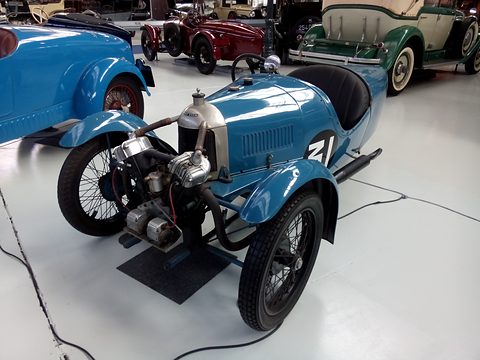
Darmont
The French Morgan: built under licence at Courbevoie, then developed into fast Spéciaux and record cars, and sold long after the cyclecar years
length unknown - 1919
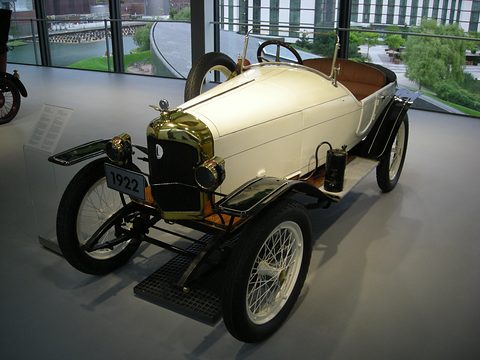
German cyclecars and Kleinwagen: the minor makers
Ten small German makers of the inflation years, from a boatyard’s BMW-engined cyclecar to a folding car driven up the Berlin radio tower
- 1919
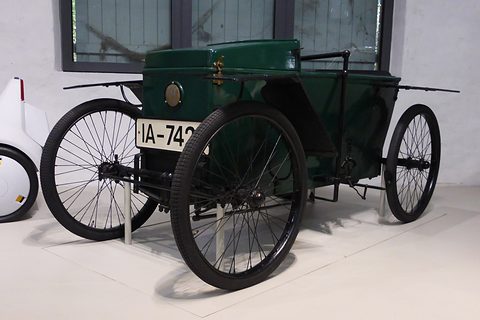
Slaby-Beringer
A one-seat electric car of 1919 with a wooden body that was its own chassis: about 2,000 built, 200 sold to Japan, and the start of DKW’s cars
2.30 m - 1919
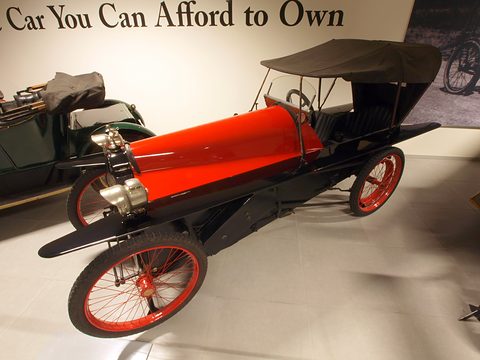
Tamplin
John Carden’s tandem cyclecar, built by a Staines garage: a body of fibreboard soaked in linseed oil, a JAP twin and one long belt
length unknown - 1920
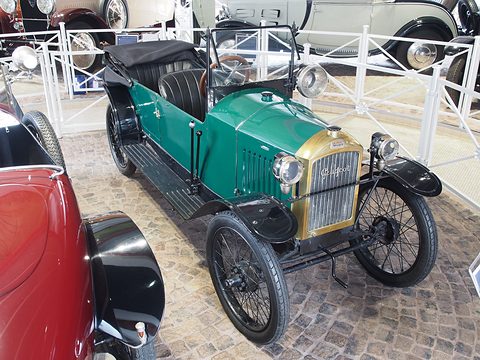
Peugeot Quadrilette
Peugeot’s cyclecar of 1920: a real four-cylinder engine of 667 cc, a rear track of 750 mm and two seats one behind the other
2.95 m - 1921
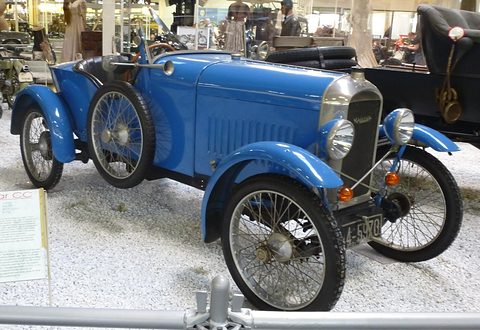
Amilcar CC
The first Amilcar: a 903 cc four built to France’s 350 kg cyclecar tax class, which it soon outgrew
length unknown - 1921
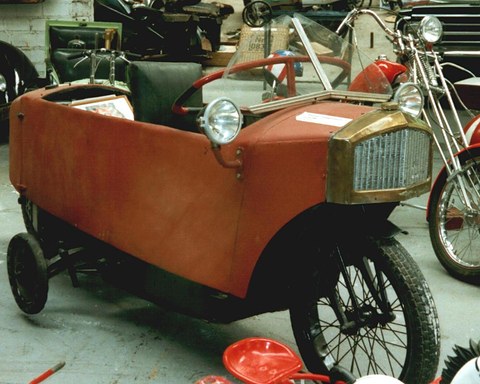
Mauser Einspurauto
A car body balanced on two wheels like a motorcycle, built by a rifle maker, with little wheels to let down at the kerb
3.00 m - 1921
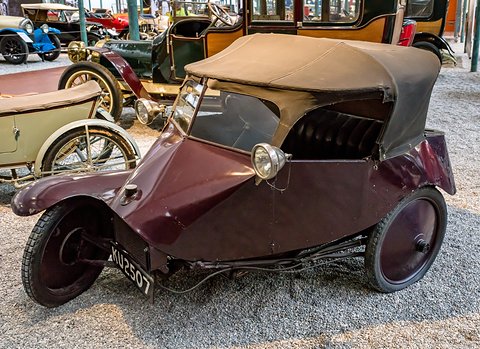
Scott Sociable
A machine-gun carrier the army never ordered, turned into a lopsided two-seat three-wheeler by the father of the Scott motorcycle
length unknown - 1922
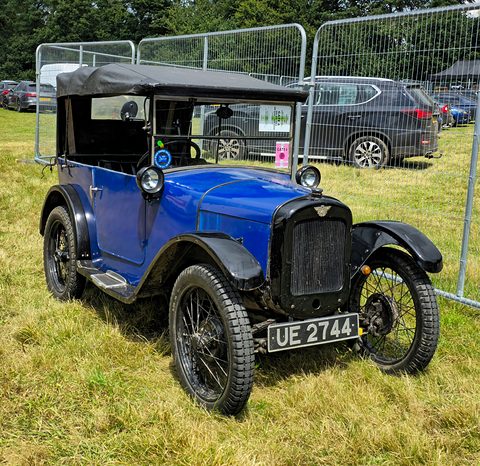
Austin Seven
The big car in miniature that motorised Britain, finished off the cyclecar, and became the first BMW
2.79 m - 1922
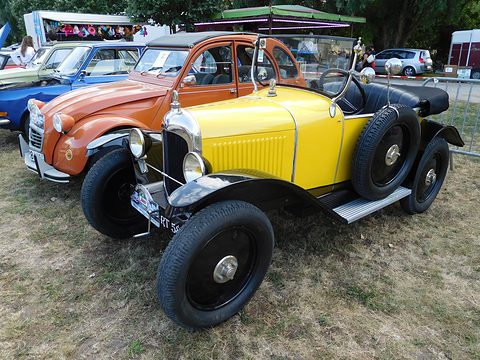
Citroën 5HP
Citroën’s small, complete car at a cyclecar price, sold to women in pale yellow; with the Austin Seven it ended the cyclecar
3.20 m - 1924
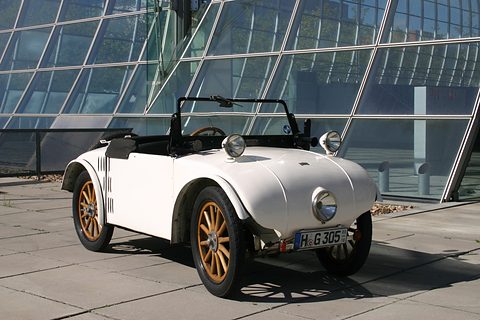
Hanomag 2/10 PS
The “army loaf”: a slab-sided two-seater with its engine at the back, one headlamp, one door and no running boards
2.78 m - 1924
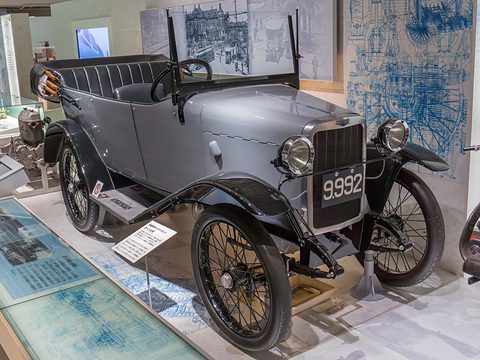
Otomo
A small car designed and built in Japan from its own parts, sold below cost, and regarded as the first Japanese car exported
3.03 m - 1924
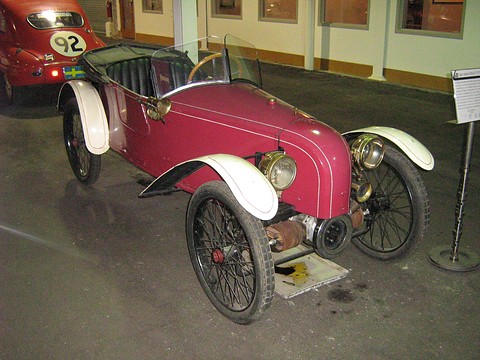
Sima-Violet
Marcel Violet’s two-stroke cyclecar: a flat twin in the wind, a tube for a chassis, a plywood body, and class wins in 1926
length unknown - 1925
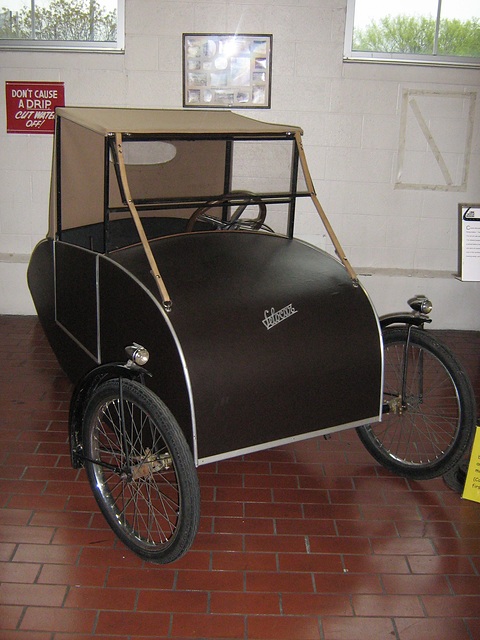
Mochet Vélocar
A two-seat pedal car built because a mother would not let her son have a bicycle; cut in half, it broke the hour record
length unknown - 1926
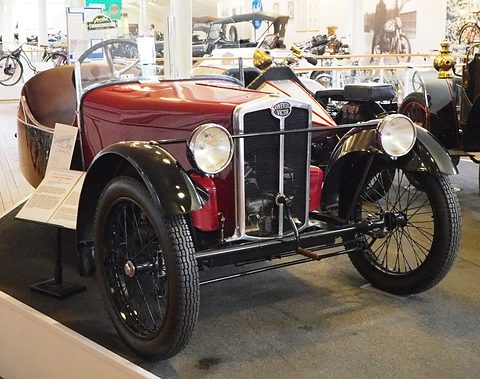
British three-wheelers of the 1920s and 1930s
Three-wheelers kept under 8 cwt to be taxed as motorcycles: Coventry-Victor, BSA, Raleigh and the first Reliants
- 1927
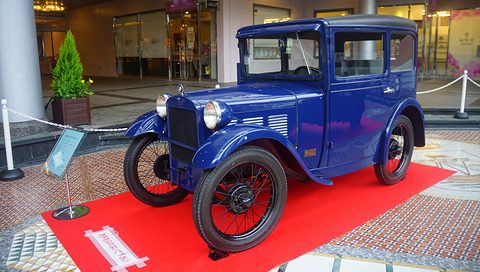
BMW 3/15
BMW’s first car: an Austin Seven made under licence at Eisenach, which BMW bought with the factory in 1928
3.00 m - 1928
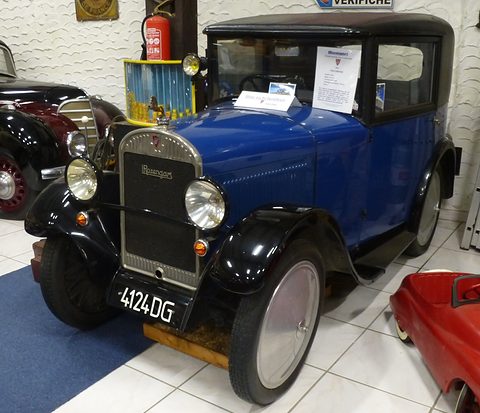
Rosengart LR2
France’s Austin Seven, built under licence by a self-made millionaire of screws and shell fuses
length unknown - 1928
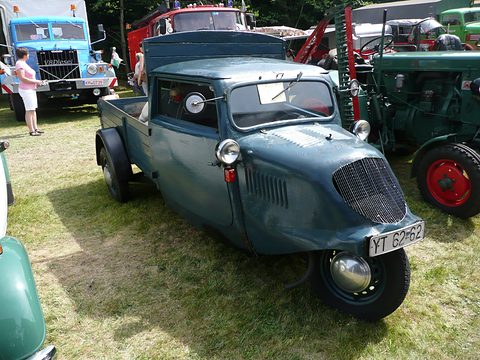
Tempo three-wheelers
Hamburg’s pre-war maker of tax-free delivery tricars, whose A 400 became the standard German three-wheeler
length unknown - 1929
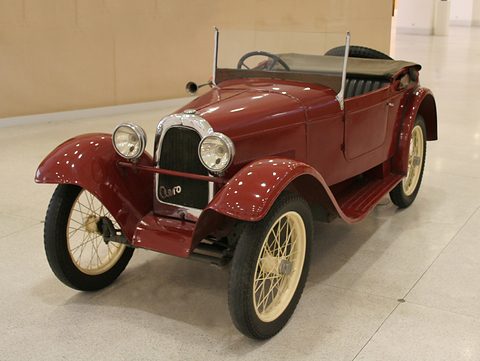
Aero 10
A Prague aircraft maker’s first car: a 499 cc two-stroke that won long-distance rallies across Europe
3.20 m - 1930
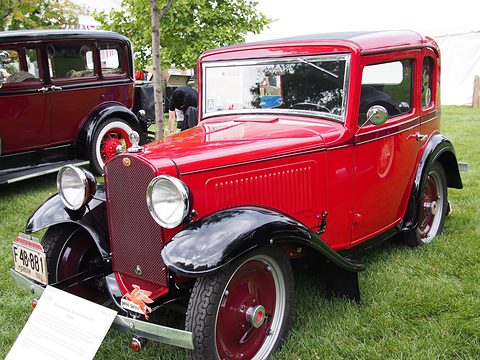
American Austin
The Austin Seven in an American suit: 184,000 orders reputedly taken, about 20,000 built, and the jeep at the end of it
3.09 m - 1931
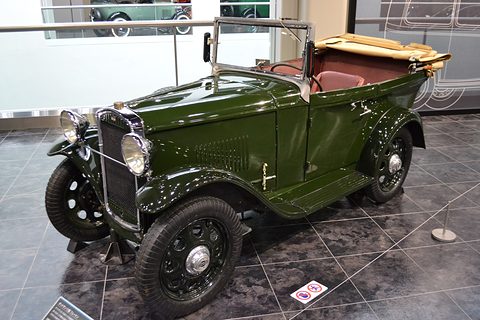
Datsun Type 11
The first Datsun: a 495 cc four built for Japan’s licence-free class of 1930, and the start of Nissan
2.71 m - 1931
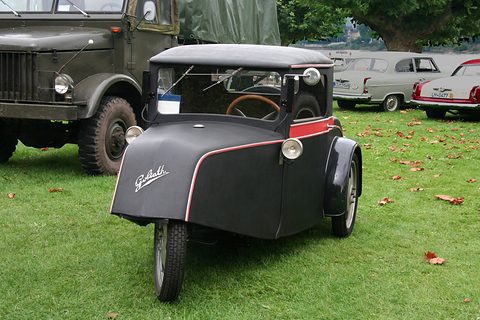
Goliath Pionier
Carl Borgward’s first car: a fabric-bodied three-wheeler built for Germany’s tax-free, licence-free three-wheeler rules
3.10 m - 1931
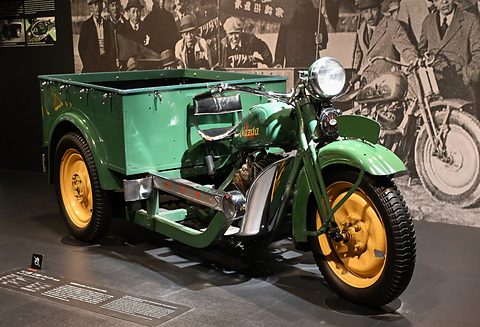
Mazda-Go
Mazda’s first vehicle: a three-wheeled truck with handlebars, a reverse gear and a differential, sold by Mitsubishi from 1931
length unknown - 1933
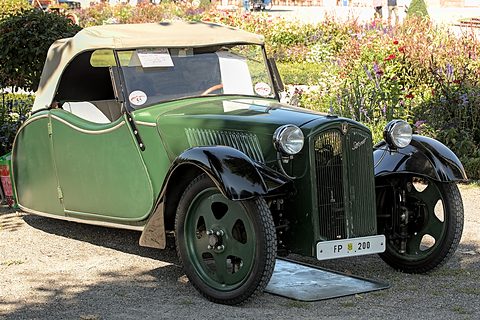
Framo Stromer
A front-drive DKW-engined three-wheeler, free of tax and of the driving licence, from the firm that later became Barkas
length unknown - 1933
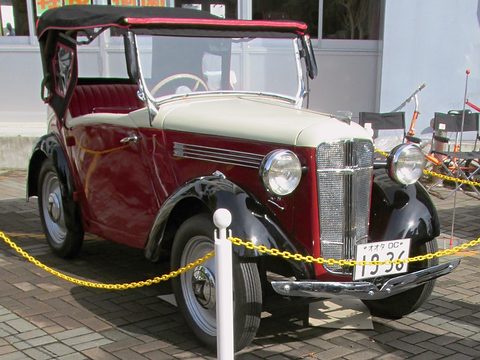
Ohta
Japan’s other pre-war small car beside the Datsun, built to the licence-free 750 cc rules and backed by Mitsui
length unknown - 1933
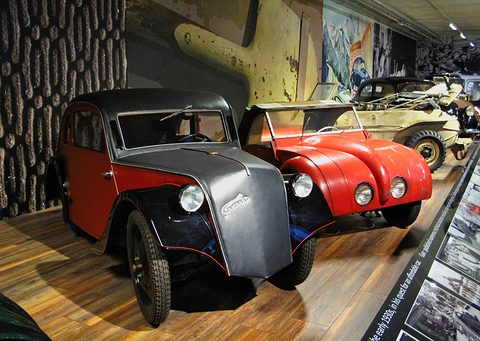
Standard Superior
Josef Ganz’s backbone-chassis small car, advertised as a German Volkswagen in 1933, before Porsche’s
3.30 m - 1934
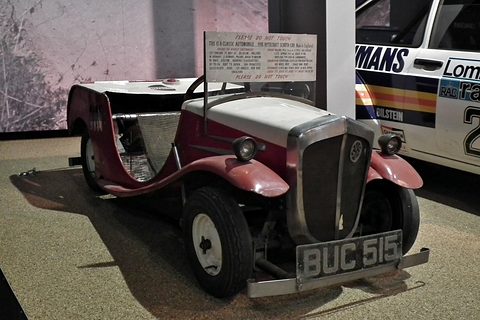
Rytecraft Scootacar
A fairground dodgem made legal for the road: one pedal, no springs, 24 km/h and £70 in 1934
2.44 m - 1936
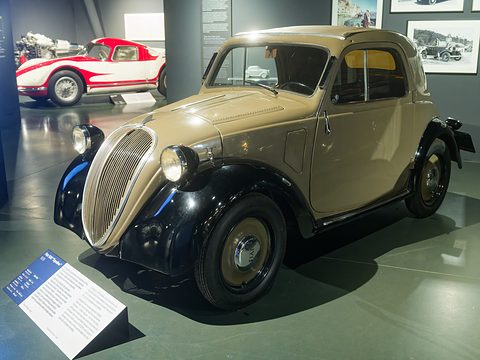
Fiat 500 Topolino
Italy’s first people’s car: a four-cylinder scaled down to two seats, with a mouse’s face and no water pump
3.21 m - 1939
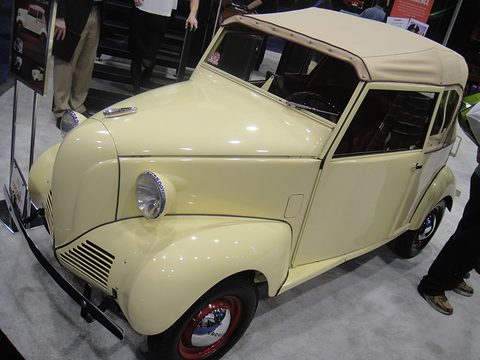
Crosley
America’s smallest car of 1939: a two-cylinder convertible sold in Macy’s by the radio king Powel Crosley
length unknown
Era 3 of 7 · 1940–1952
Make do and mend
With petrol all but denied to French civilians under the Occupation, Peugeot built an electric two-seater, the Peugeot VLV; Vichy banned it in 1942, yet 377 were built by 1945. After the war Britain’s state, which had issued disabled drivers free single-seat invalid carriages since the First World War, took them from new makers, among them Invacar. In Rosenheim Fritz Fend, a young aircraft engineer, designed the Fend Flitzer: a one-seat tricycle for the war-disabled that able-bodied buyers wanted too; it grew into the Messerschmitt.
Britain’s light three-wheelers paid motorcycle tax. The Bond Minicar of 1949 had no doors and no reverse; the Reliant Regal of 1952, a four-seater, was built to weigh under 406 kg (8 cwt) to qualify. America bought the King Midget as a $270 kit from the back pages of Popular Science. Japan created its kei class of light cars in July 1949, and in 1952 the Auto Sandal was the first kei car with four wheels to go on sale.
- 32 cars
- 9 maker groups
- 3 essential
- Shortest: Fend Flitzer, 2.00 m
- 1940
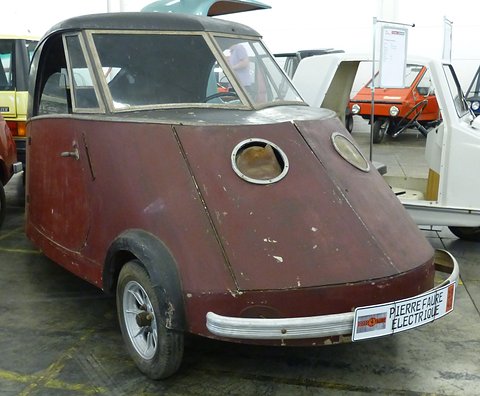
Autelec
A brake maker’s battery van for the tradesmen of occupied Paris: 25 km/h, about 65 km, then 12 hours on the charger
length unknown - 1941
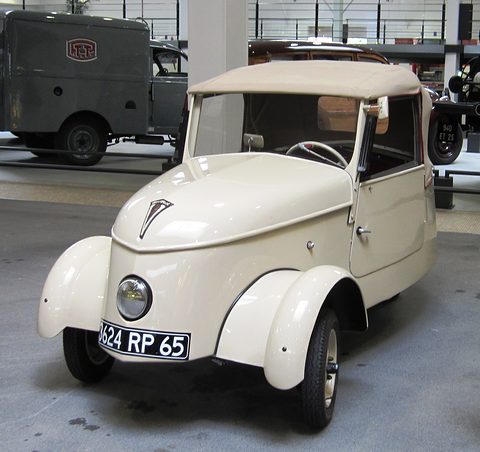
Peugeot VLV
Peugeot’s electric two-seater for occupied France: Vichy banned its electric cars in 1942, yet 377 were built by 1945
2.67 m - 1941
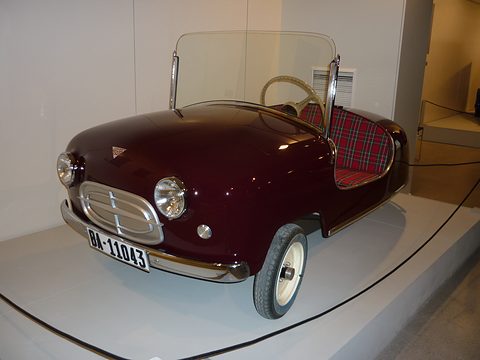
Spanish microcars: the minor makers
Franco-era autarky produced dozens of one-off and small-series microcars; most died after the SEAT 600 of 1957 and the Stabilisation Plan of 1959.
- 1942
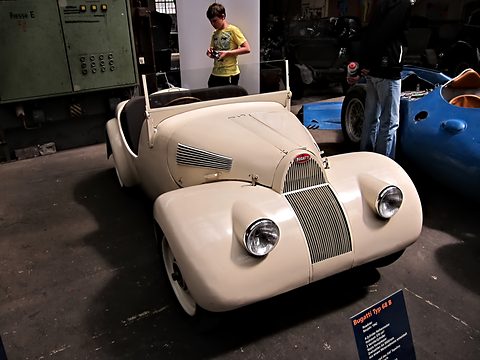
Bugatti Type 68
Ettore Bugatti’s last car: a two-seater for post-war France with a supercharged four of under 400 cc, revving to 12,000 rpm
2.90 m - 1942
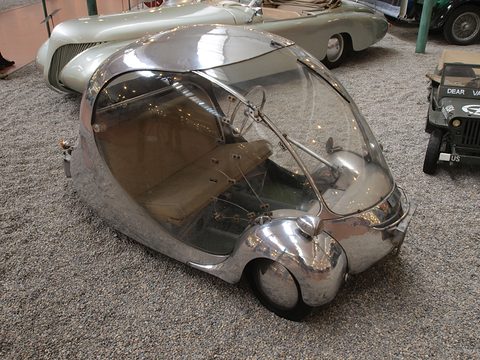
L’Œuf électrique
An aluminium egg with Plexiglas doors, built in occupied Paris by the designer of France’s locomotives, and kept by him until 1990
length unknown - 1944
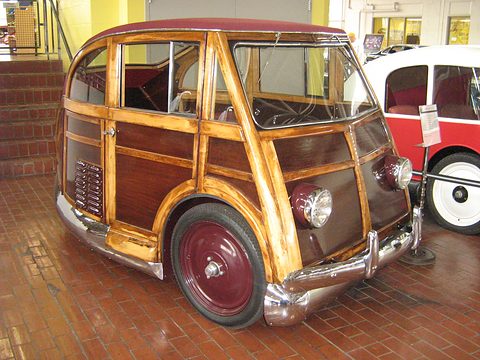
American post-war microcars
Tiny post-war American cars, from the honest Brogan and Airway to the Bobbi-Kar and Towne Shopper, fronted by a convicted fraudster.
- 1945
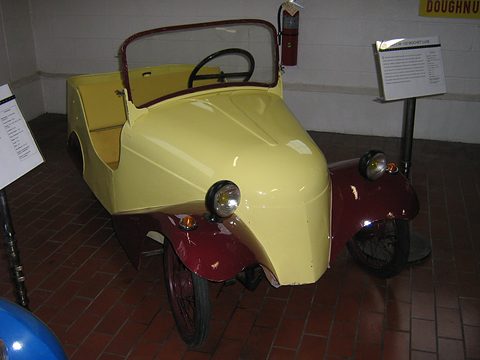
Mochet CM-125
The pedal-car maker’s licence-free voiturette: 125 cc, band brakes, a pull-start, and delivery in six weeks when a 2CV took years
2.40 m - 1946
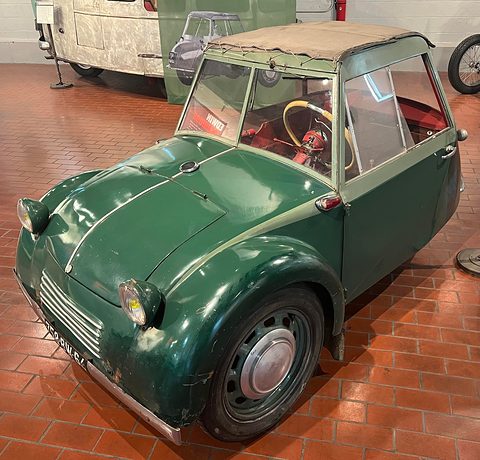
French post-war microcar makers
A saddle for the driver and a bench behind, a belt-driven clutch, a car with no differential: the small makers of post-war France
- 1946
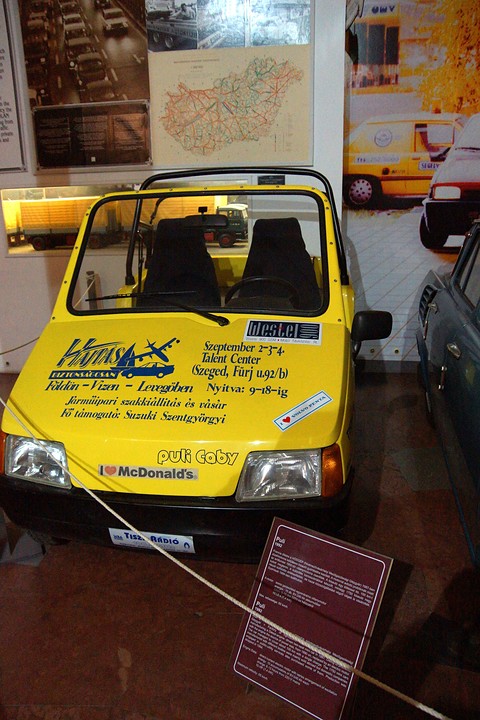
Hungarian microcars
The törpeautó, or dwarf car: Hungary’s 1950s prototypes, one with suspension by Ernő Rubik Sr., and the Puli built for France thirty years later.
- 1946
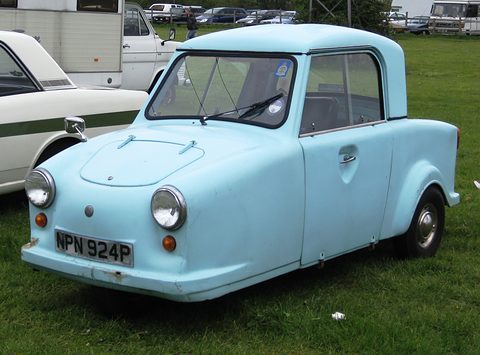
Invacar
The state’s ice-blue single-seaters for disabled drivers, issued free for 30 years, then banned from the road and crushed in 2003
2.97 m - 1946
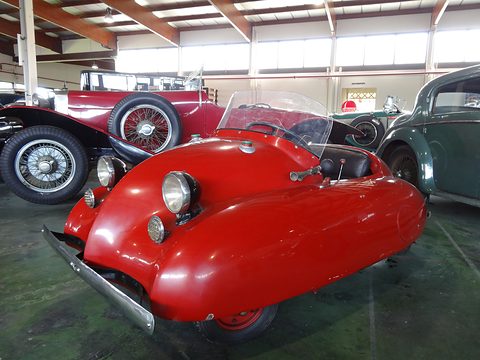
Italian post-war minicars (Volugrafo Bimbo, Fimer, Atomo and others)
Italy’s small minicar makers of the late 1940s; the doorless Volugrafo Bimbo came from the maker of a paratroop motorcycle.
- 1946
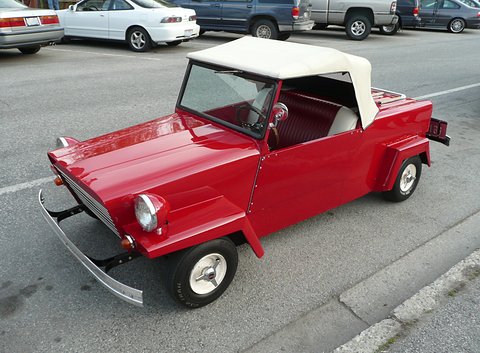
King Midget
America’s most successful post-war microcar: a $270 kit in a crate from the back pages of Popular Science, then about 5,000 cars in 24 years
2.97 m - 1946
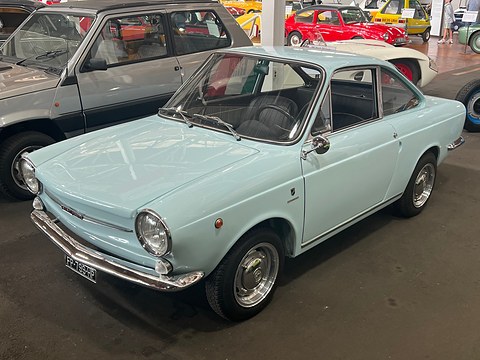
Moretti Cita and Moretti’s Fiat-based minicars
Turin’s finely finished post-war Cita, then Michelotti coupés and Minimaxi beach cars on the Fiat 500 and 126, until Moretti closed in 1989
3.00 m - 1946
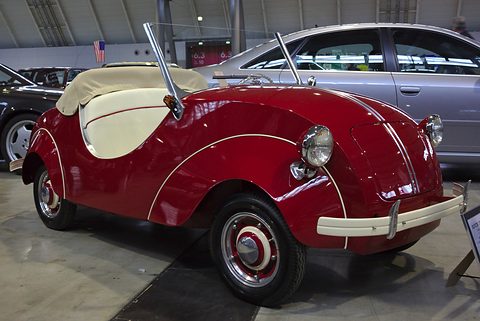
Rovin
A racing marquis’s two-seater with a water-cooled flat twin in the tail, built in a luxury-car factory and driven to Monte Carlo
2.80 m - 1947
ALCA Volpe
Launched in Rome in 1947 beside a comic actor, paid for in deposits and never delivered: Italy’s great post-war microcar scandal
2.50 m - 1948
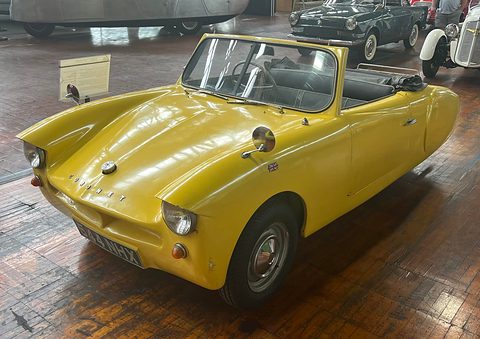
Britain’s forgotten 1950s microcars
The British firms that built a handful of minicars each, from the Eaglet of 1948 to the Colliday Chariot
- 1948
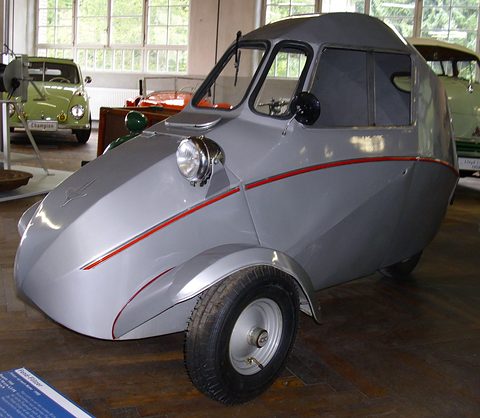
Fend Flitzer
A young aircraft engineer’s single-seat tricycle for the war-disabled, which able-bodied buyers wanted too, and which grew into the Messerschmitt
2.00 m - 1948
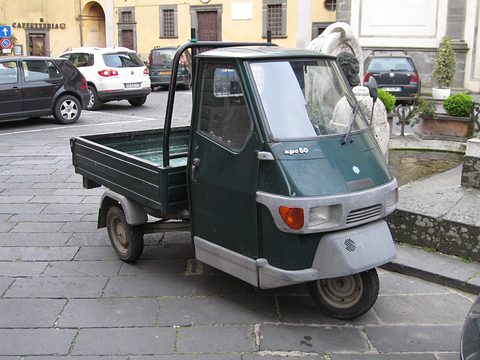
Piaggio Ape
Corradino D’Ascanio’s Vespa with a load bed: Italy’s village van since 1948, and still being built
2.68 m - 1949
Atlas Babycar
A small steel roadster aimed at women, driving one rear wheel only, and sold on one chassis at three prices
2.77 m - 1949
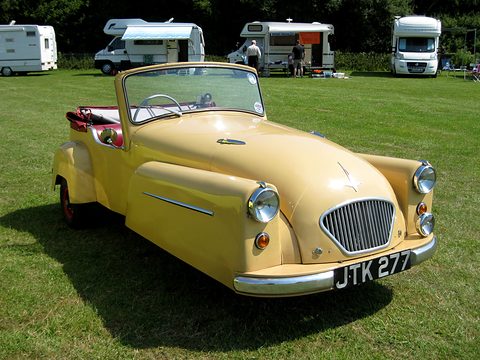
Bond Minicar
Britain’s best-known post-war minicar: an aluminium three-wheeler whose engine turned with its single front wheel, built in seven Marks over 18 years
2.69 m - 1949
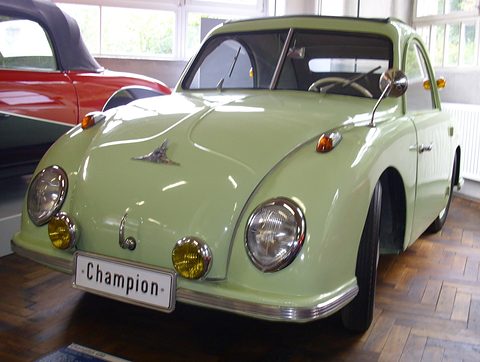
Champion
A gearbox maker’s 1946 roadster that went through five firms in six years, from doorless two-seaters to a neat convertible saloon, and ended as the Maico
3.17 m - 1949
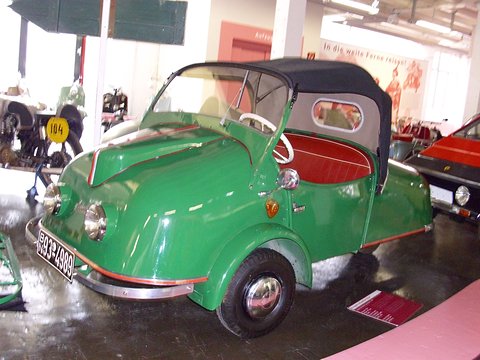
German Kabinenroller small makers
The one-offs and small series of the West German cabin-scooter boom, built by scooter, wheelchair, lorry and suspension makers.
- 1949
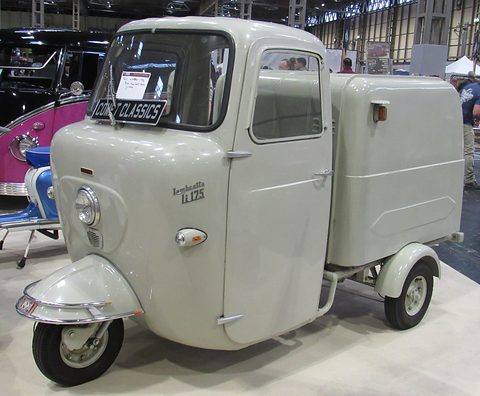
Lambretta Lambro
Innocenti’s scooter grown into a truck, from a front-loading tricar in 1949 to a Bertone cab in 1969
2.92 m - 1949
Meera
A self-taught engineer’s people’s car for India, built and rebuilt from 1949 to 1975, and never put into production
length unknown - 1949
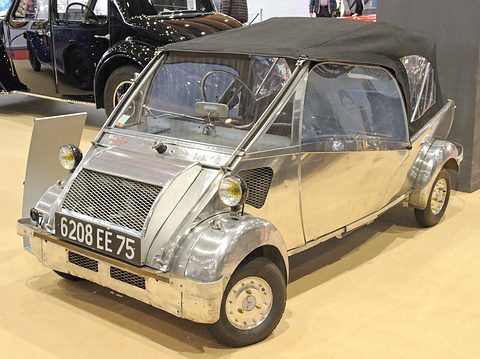
Voisin Biscooter
An aviation pioneer’s last car: polished aluminium, two chairs and a flat screen. France ordered a thousand; only Spain built it
2.57 m - 1950
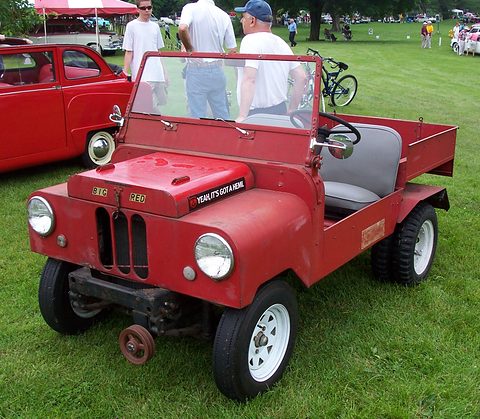
Crosley Farm-O-Road
Powel Crosley’s answer to the small farmer: a tiny road-legal tractor-jeep on a 63-inch wheelbase, with six forward speeds and skis for its front wheels
2.32 m - 1950
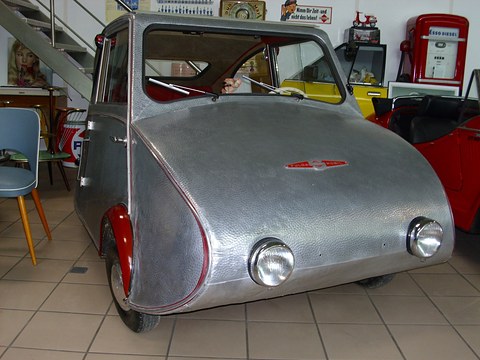
Fuldamobil
A journalist’s design built by an electrical wholesaler in Fulda from 1951 to 1969, and licensed to more countries than any other bubble car
2.85 m - 1950
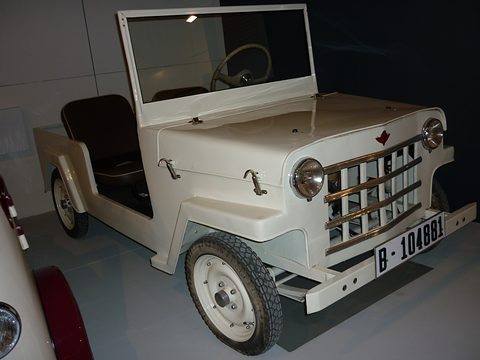
Kapi
An infantry captain’s motor industry, named after his rank: three-wheelers, a jeep and a one-cylinder copy of the Mercedes 190 SL
2.56 m - 1950
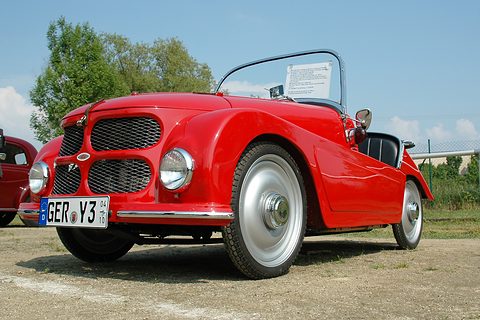
Kleinschnittger F125
A 150 kg aluminium two-seater with a 123 cc engine, a pull-cord start and no reverse: to turn it round, you lifted the tail
2.90 m - 1950
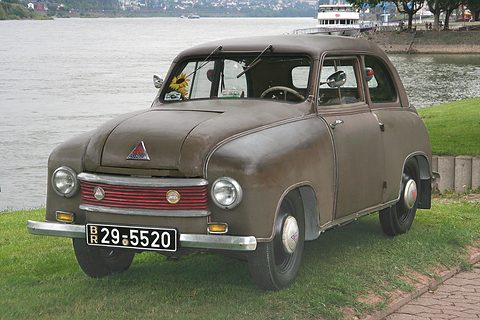
Lloyd LP300
Borgward’s cheap four-seater of 1950, its plywood body covered in leatherette: Germans called it the sticking-plaster bomber
3.20 m - 1950
Reyonnah
A Paris garage owner’s tandem two-seater whose front wheels fold in, so that it parks in a gap 75 cm wide
2.90 m - 1950
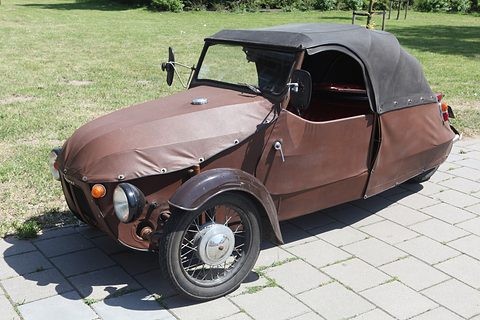
Velorex
Two Czech brothers’ three-wheeler of steel tube and leatherette, sold to disabled drivers through their union and loved now as a cult car
3.25 m - 1950
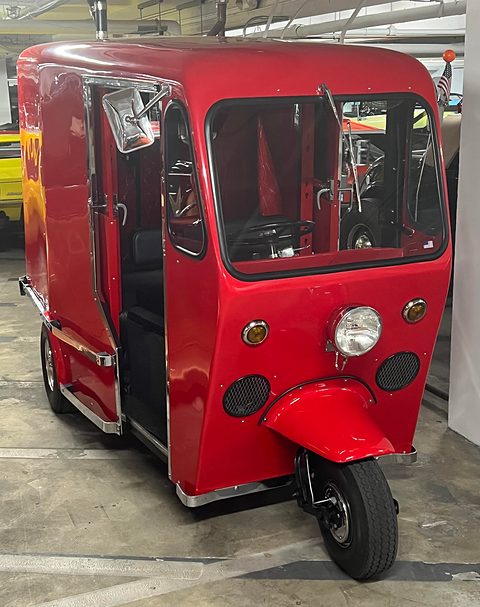
Westcoaster Mailster
The three-wheeler that put America’s letter carriers behind the wheel, until snow, wind and a large dog had their say
2.92 m - 1951
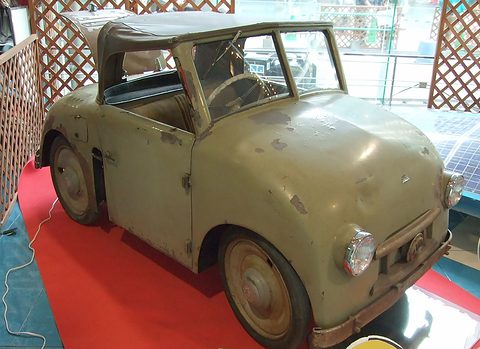
Auto Sandal
Japan’s first four-wheeled kei car on sale, a hand-built Nagoya two-seater started with a kick from outside
2.28 m - 1951
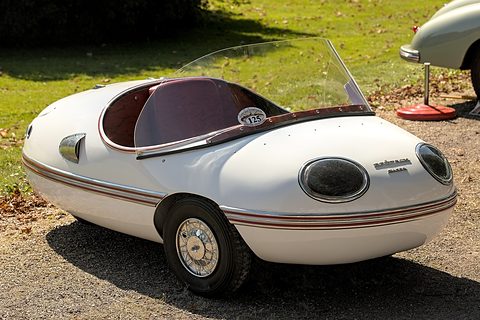
Brütsch
Egon Brütsch’s glass-fibre microcars: about a dozen designs, a dozen or so of each, and licences sold abroad
2.20 m - 1951
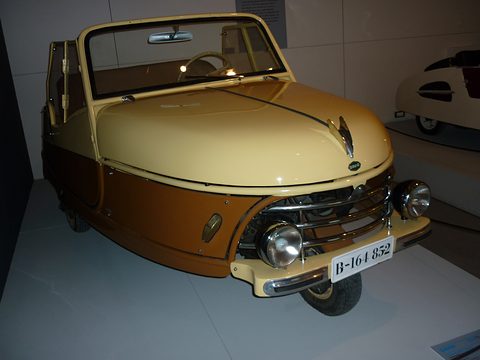
David Torpedo 2S
Barcelona’s taxi firm built a three-wheeler whose engine, gearbox and front wheel all turned together when it steered
2.80 m - 1951
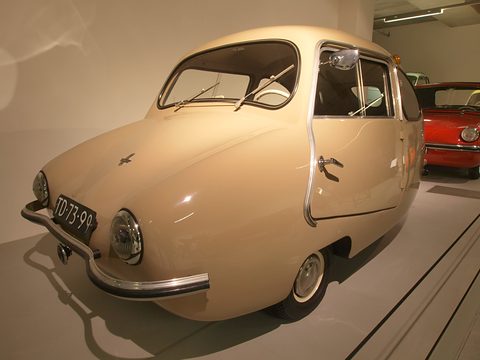
Dutch and Belgian microcars
The Low Countries’ dwarf cars: kits, licences and prototypes, and the Shelter, a home-made city car meant for hire.
- 1952
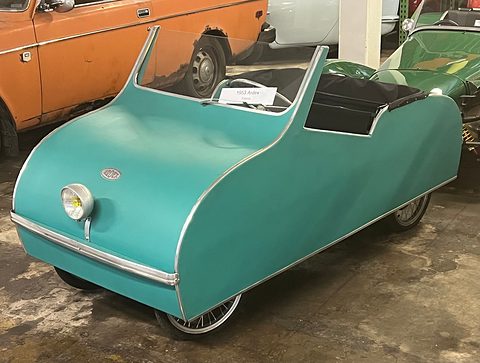
Ardex
Plywood microcars covered in vinyl from a Nanterre workshop that showed them to buyers on Mondays and Saturdays only
length unknown - 1952
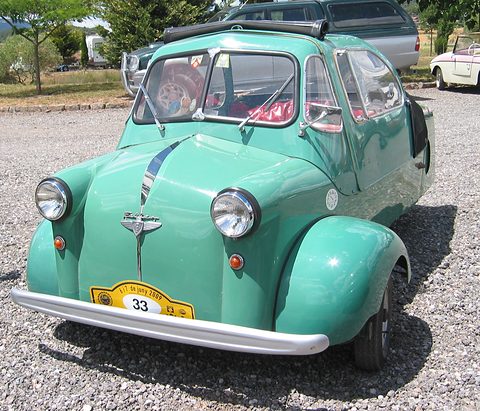
Austrian microcars
Vienna’s three-wheeled Autoroller of the early 1950s, and the Graz moped cabins, built until 1979.
- 1952
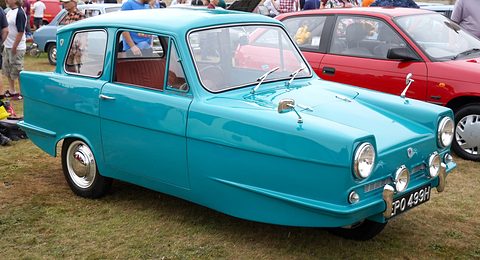
Reliant Regal
A four-seat family car with a water-cooled four, built to weigh under 8 cwt so it could be taxed as a motorcycle; Reliant’s best seller
3.43 m - 1952
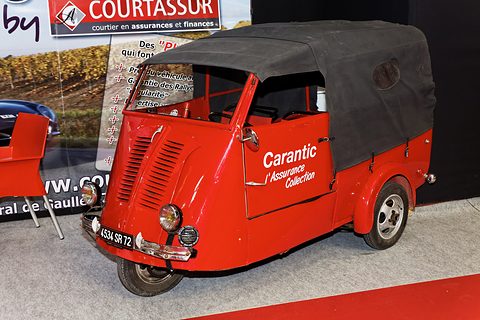
Solyto
A licence-free delivery van with a steering wheel and its engine on the front fork, built in Lyon until 1974
2.45 m
Era 4 of 7 · 1953–1964
The bubble boom
In West Germany a motorcycle licence of the old class 4 also covered a small car of up to 250 cc, and the bubble car filled that space. The Iso Isetta of 1953 opened at the front; BMW rebuilt it round its own motorcycle engine and built 161,728 of the BMW Isetta. Fend’s tandem two-seater went into an idle Regensburg works of Messerschmitt, the aircraft maker, as the Messerschmitt KR175, and its successor, the Messerschmitt KR200, had no reverse gear. In 1957 the four-seat Goggomobil outproduced the Isetta, and it reached 284,491 by 1969.
When Suez brought petrol rationing to Britain, Heinkels came from Hanover to Croydon by Dakota, five a day; later Croydon built the Heinkel itself, as the Trojan 200, and the Isle of Man built the Peel P50, 1,372 mm long, which Guinness lists as the smallest production car. In 1957 the Fiat Nuova 500 set the length of the red notch, and in 1958 Japan’s kei box took four adults in the Subaru 360. West German buyers were already moving up to bigger small cars; in Britain the Mini of 1959 finished the job, and BMW built its last Isetta in 1962.
- 65 cars
- 3 maker groups
- 9 essential
- Shortest: Peel P50, 1.37 m
- 1953
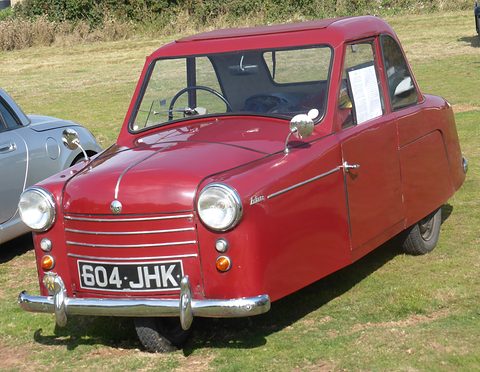
AC Petite
The Cobra maker’s two-stroke three-wheeler, styled like its invalid carriages, with a tiny front wheel and big spoked rear ones
3.12 m - 1953
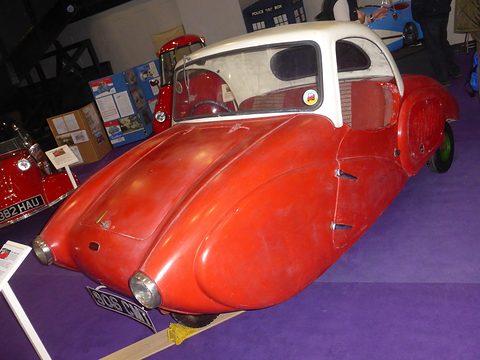
Allard Clipper
A rally winner’s family three-wheeler with a coloured glass-fibre body and children’s seats in the boot, abandoned after about 20
length unknown - 1953
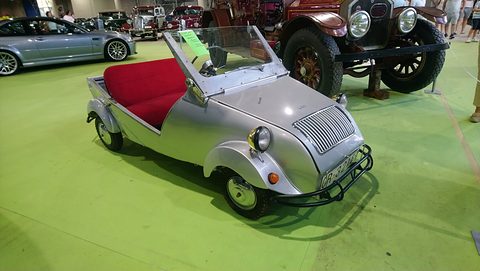
Biscúter
Gabriel Voisin’s last design, built only in Spain: no doors, no reverse at first, one driven wheel, and the people’s car before the SEAT 600
2.56 m - 1953
Edith
A Melbourne engineering firm’s Villiers-engined microcar of the 1950s, about which almost nothing else is known
length unknown - 1953
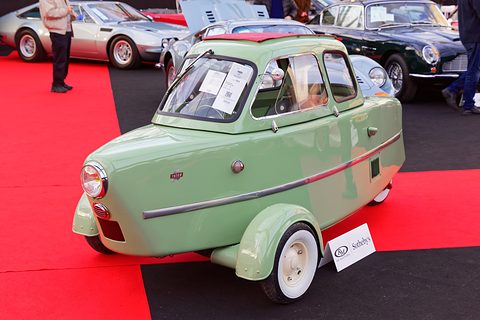
Inter 175 A Berline
An aircraft maker’s tandem bubble car, with handlebar steering, folding front wheels and a helicopter-type starter
3.00 m - 1953
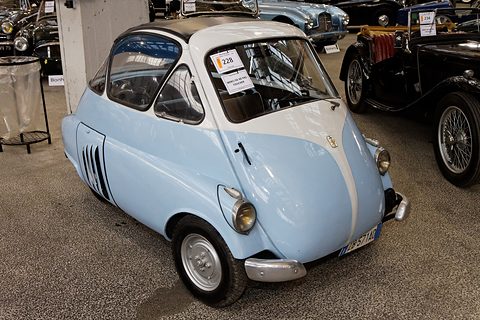
Iso Isetta
The first Isetta: a glider designer’s egg with its door in the nose, a slow seller in Italy, and the licence that helped save BMW
2.25 m - 1953
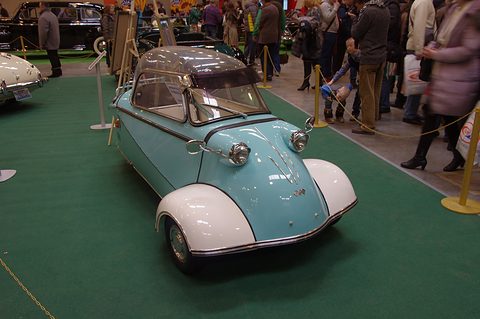
Messerschmitt KR175
The first Messerschmitt: Fritz Fend’s tandem two-seater, built in an idle aircraft works and steered by handlebar
2.82 m - 1954
Fairthorpe Atom
The first car of Air Vice-Marshal Don Bennett, the RAF’s Pathfinder chief: a glass-fibre coupé with a motorcycle engine in the back
length unknown - 1954
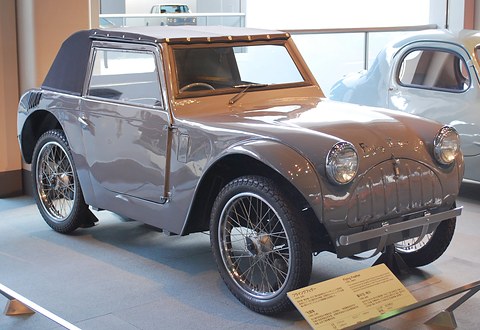
Flying Feather
Tomiya Ryūichi’s featherweight kei car: motorcycle wheels, a V-twin in the tail and no brakes at the front
2.77 m - 1954
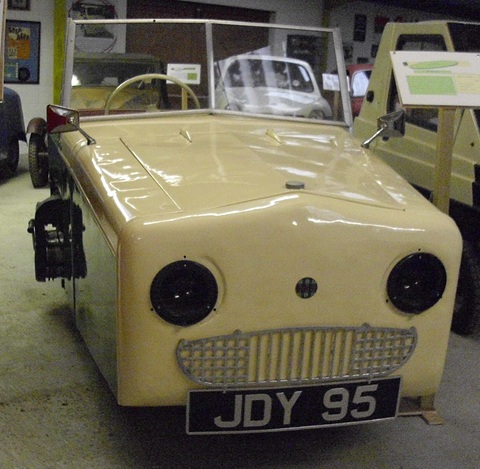
Gordon
A football-pools firm’s three-wheeler, sold as Britain’s cheapest car, with its engine bolted to the outside of the body
length unknown - 1955
Alan
A one-man homologated microcar, rediscovered and restored by the old microcarfan.com’s owner in the late 1980s
length unknown - 1955
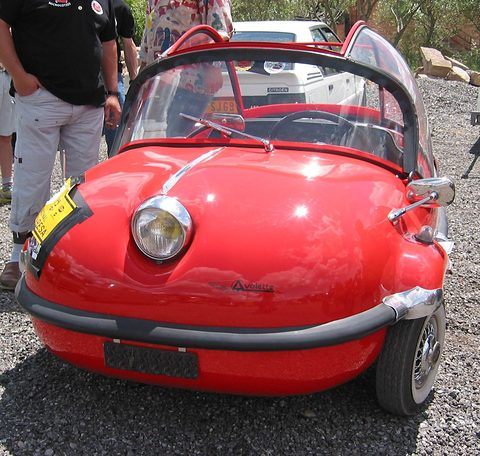
Avolette
Egon Brütsch’s fibreglass egg, built under licence by Cessna’s French agent in an airfield hangar
2.40 m - 1955
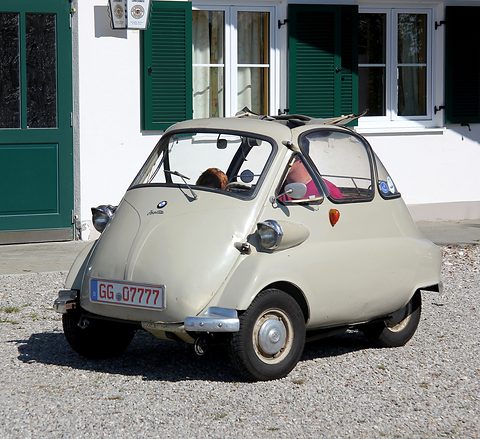
BMW Isetta
Iso’s front-door bubble, re-engineered by BMW round a motorcycle engine: 161,728 sold, and widely credited with saving BMW
2.29 m - 1955
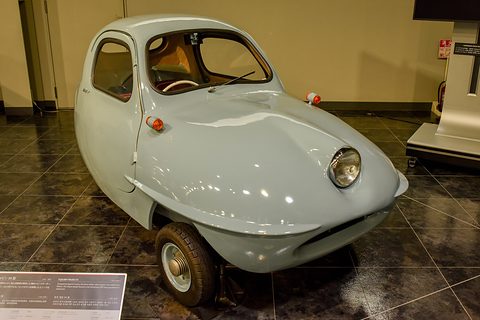
Fuji Cabin
Tomiya Ryūichi’s one-eyed cabin scooter, a glass-fibre shell with no chassis, of which only 85 were built
2.95 m - 1955
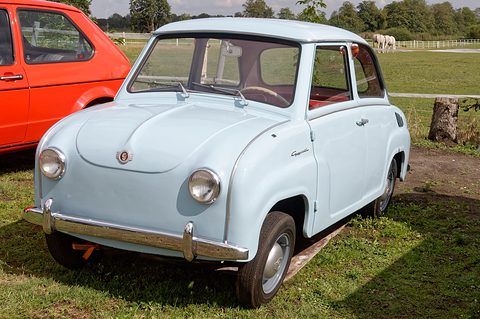
Goggomobil
Hans Glas’s four-seat “real car in miniature”: Germany’s most-produced microcar, built for 14 years
2.90 m - 1955
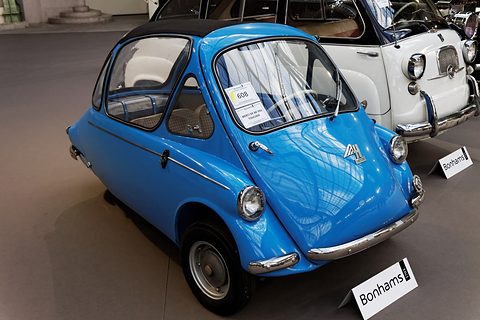
Heinkel Kabine
The aircraft maker’s answer to the Isetta: a front door, a steering column that stayed put, and 100 kg less to carry
2.55 m - 1955
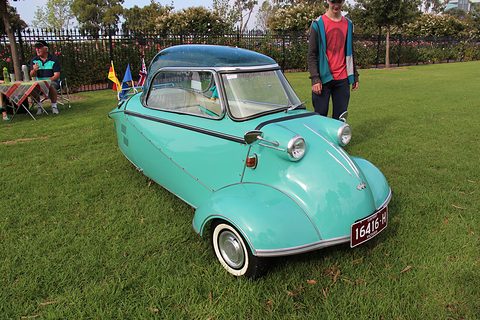
Messerschmitt KR200
The bubble car most people picture: tandem seats, a Plexiglas canopy, and reverse by running the engine backwards
2.82 m - 1955
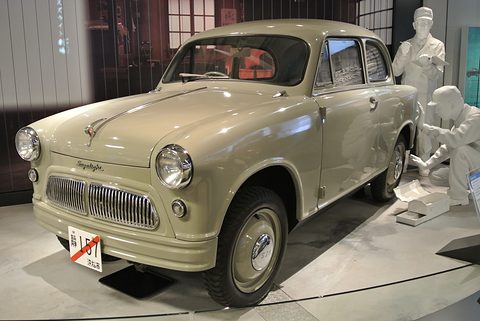
Suzuki Suzulight
Suzuki’s first car: a loom maker’s copy of the Lloyd LP400, Japan’s first front-wheel-drive car built in series
2.99 m - 1955
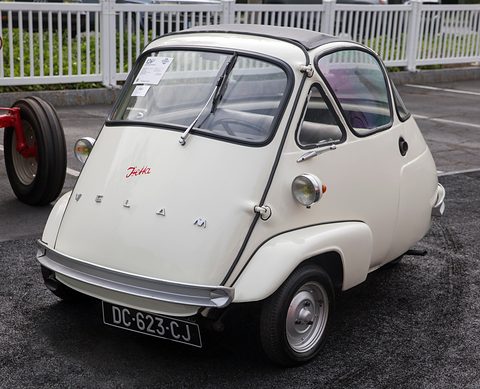
Velam Isetta
France’s Isetta, re-engineered with its own rounder body, 34 changes and a speedometer in the steering-wheel hub
2.38 m - 1956
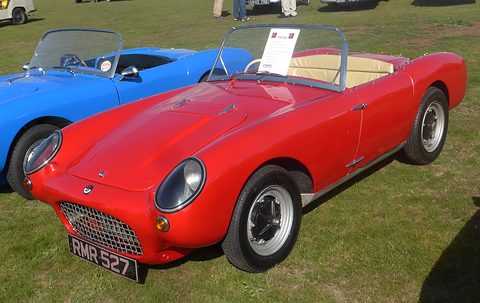
Berkeley
A caravan maker’s glass-fibre sports car with front-wheel drive in 1956, and a three-wheeler you could drive on a motorcycle licence
3.11 m - 1956
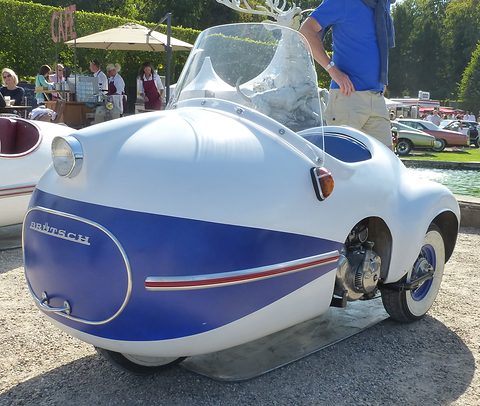
Brütsch Mopetta
Egon Brütsch’s single-seat glass-fibre egg: sold as a floating moped car, though its production layout made floating impossible; 14 were built
1.70 m - 1956
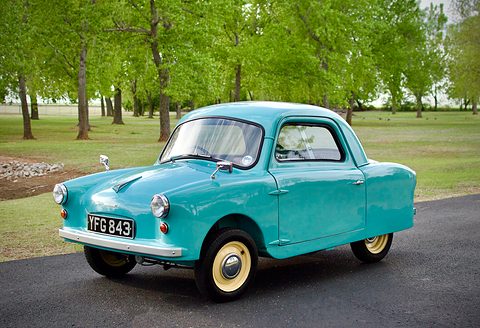
Opperman Unicar
The cheapest car at the 1956 London Motor Show: a gear-cutter’s 2 + 2 with its rear wheels fitted inside out
2.95 m - 1956
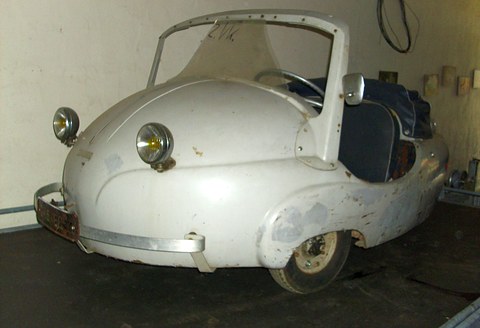
P. Vallée Chantecler
A Grand Prix team owner’s fibreglass teardrop on three wheels, named after a rooster and started like a helicopter
3.10 m - 1956
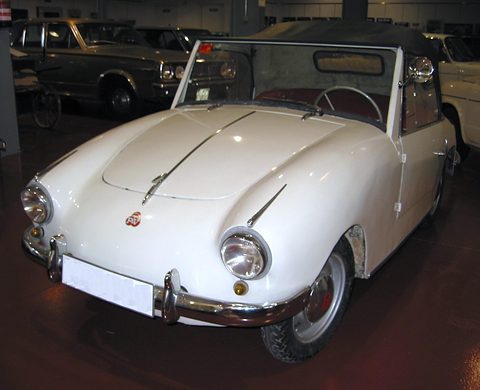
PTV 250
Manresa’s own open two-seater, one of the very few all-Spanish microcars, from a firm that went on to make site dumpers
2.95 m - 1956
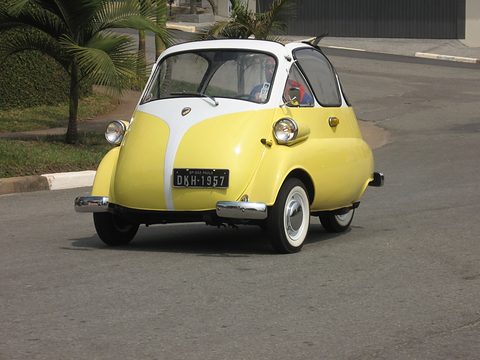
Romi-Isetta
The Isetta built by a Brazilian machine-tool maker from 1956: the first passenger car series-produced in Brazil, undone by a rule that a car must seat four
2.29 m - 1956
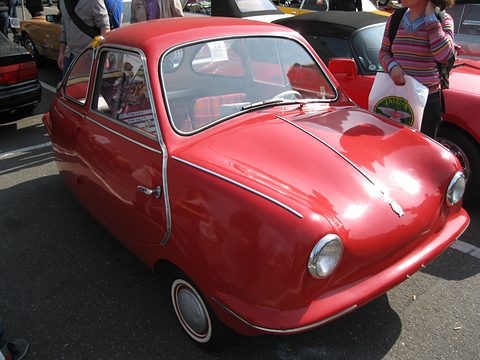
Scandinavian microcars
Sweden’s licence-built King and its licence-free Norsjö Shopper, with a Finnish prototype and five Norwegian Trolls.
- 1956
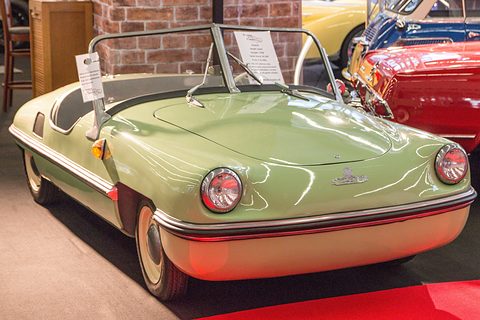
Spatz
Brütsch’s failed plastic three-wheeler, rebuilt on a chassis by the Tatra designer Hans Ledwinka as a doorless three-seat roadster
3.30 m - 1957
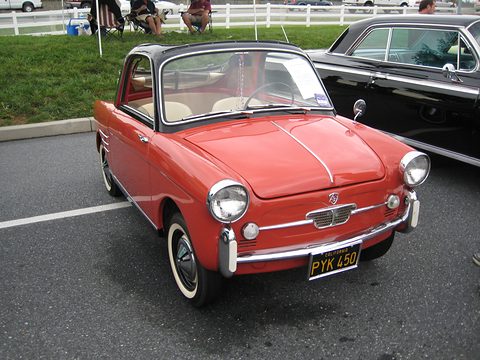
Autobianchi Bianchina
Chrome, fins and two-tone paint on Fiat 500 bones: the little luxury car that outsold the plain 500 in its first months
2.98 m - 1957
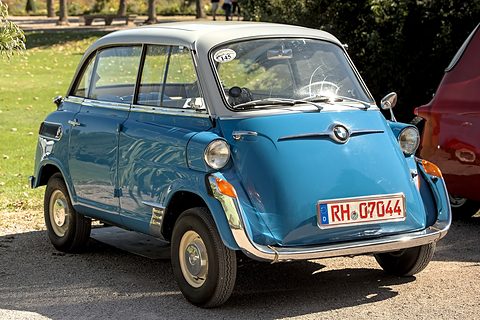
BMW 600
BMW’s four-seat Isetta, with a front door, one side door and a motorcycle flat twin: the bridge to the BMW 700
2.90 m - 1957
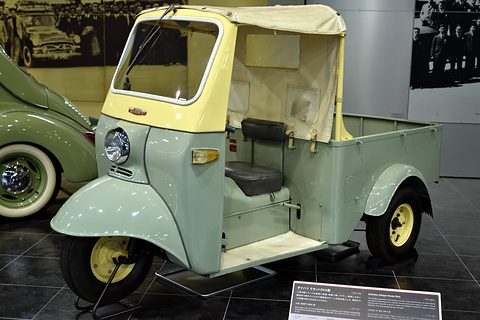
Daihatsu Midget
The three-wheeled kei truck that motorised Japan’s corner shops, and the ancestor of the Thai tuk-tuk
2.54 m - 1957
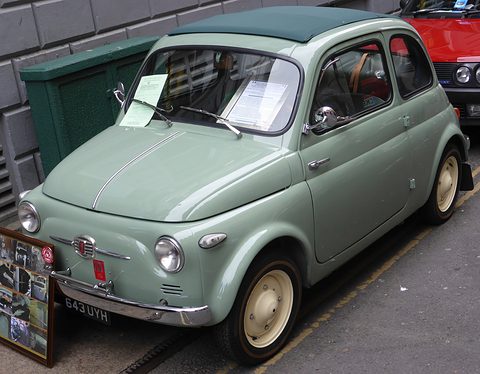
Fiat Nuova 500
Giacosa’s air-cooled twin that put Italy on four wheels, and the 2,970 mm this site measures every microcar against
2.97 m - 1957
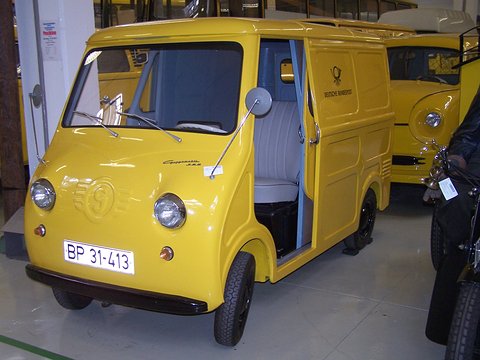
Goggomobil TL
The Bundespost’s parcel van: a Goggomobil with a box body and sliding doors for narrow streets
2.91 m - 1957
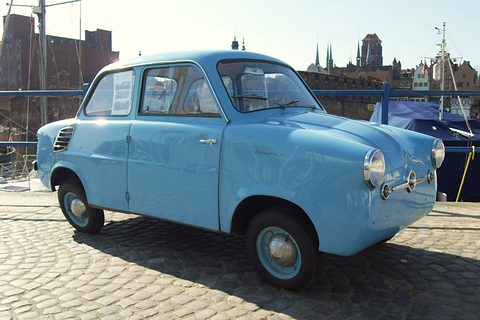
Mikrus MR-300
Poland’s only series-built microcar, made by two aircraft works with capacity to spare, whose makers denied it was a faithful copy of the Goggomobil
3.02 m - 1957
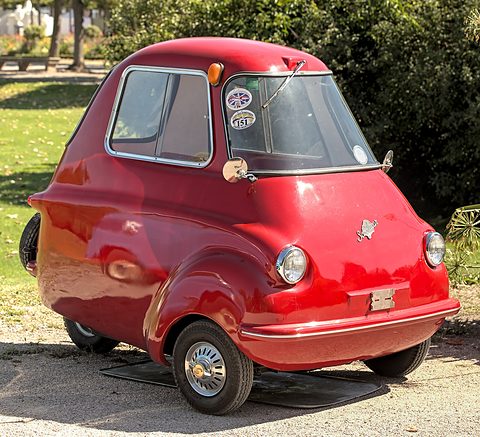
Scootacar
A locomotive works’ bubble car, its shape chalked round a man sitting astride a Villiers engine
2.21 m - 1957
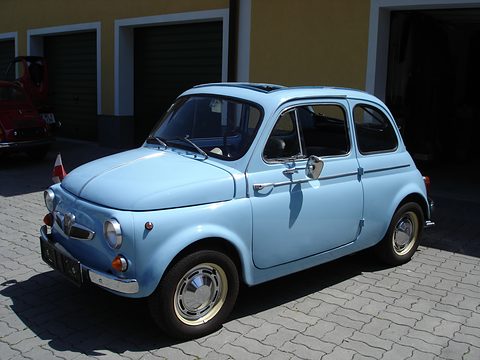
Steyr-Puch 500
A Fiat 500 body with a Puch flat twin in the tail: Austria’s own small car, and a European rally champion among touring cars
2.97 m - 1957
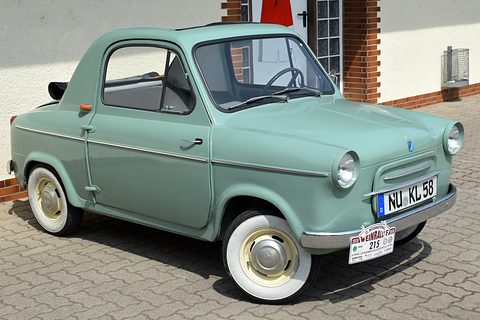
Vespa 400
Piaggio’s only car, built in France rather than in Fiat’s Italy, and launched in 1957 with Fangio and Behra beside it
2.85 m - 1957
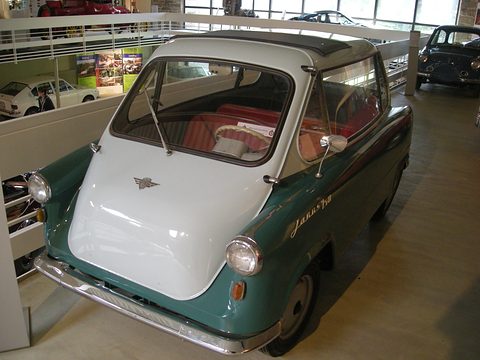
Zündapp Janus
Named after the two-faced Roman god: a door at each end, and the rear passengers riding backwards
2.89 m - 1958
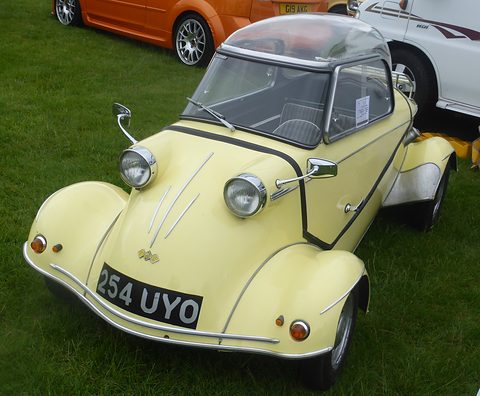
FMR Tg500
The four-wheeled Kabinenroller: twice the KR200’s power, a real reverse gear, and a name it was not allowed to use
3.00 m - 1958
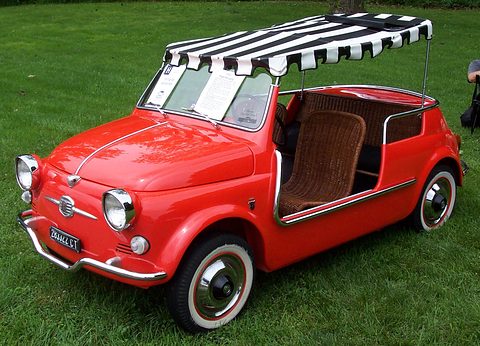
Fiat 500 Jolly
A Fiat 500 with its roof and doors cut away, wicker seats and a fringed awning: a yacht tender for the very rich
2.97 m - 1958
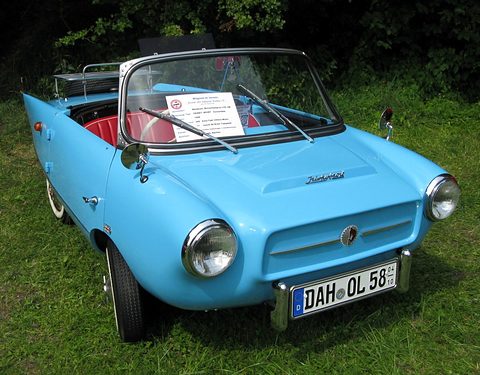
Frisky
An engine maker’s microcar from Wolverhampton, styled by Michelotti and conceived by a racing driver who had lost his business in Egypt
2.86 m - 1958
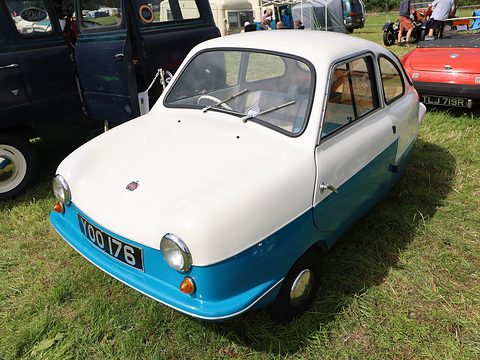
Nobel 200
The Fuldamobil built in Britain by an aircraft industry: assembled by Shorts, bodied by Bristol, chaired by a carpet king
3.20 m - 1958
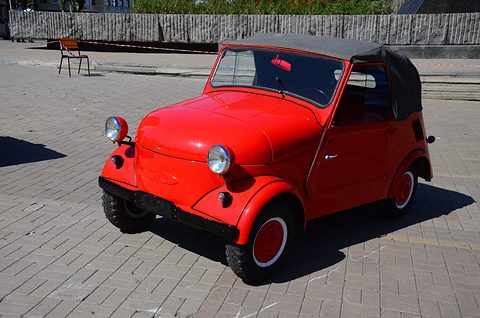
SMZ S‑3A
The Soviet Union’s first four-wheeled invalid carriage, issued free to disabled war veterans; over 200,000 were built
2.62 m - 1958
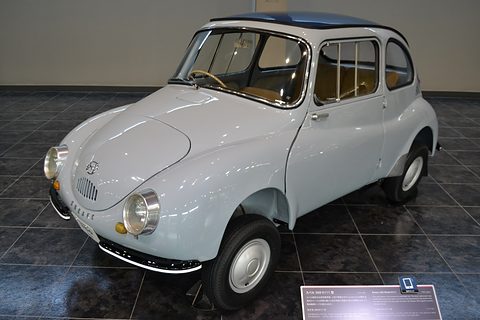
Subaru 360
Japan’s first true people’s car: four adults in a 3-metre kei car of 385 kg, built like an airframe by former aircraft engineers
2.99 m - 1959
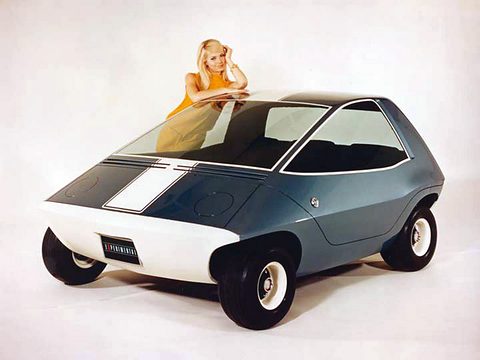
American city-car prototypes
City-car studies by big makers and would-be makers, from the Nu-Klea Starlite of 1959 to GM’s Lean Machine.
- 1959
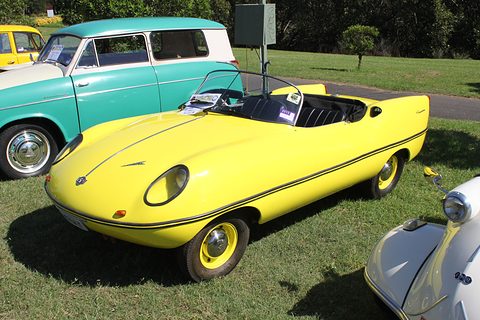
Goggomobil Dart
Australia’s doorless glass-fibre roadster on a German Goggomobil chassis, with a Renault Dauphine’s rear window for a windscreen
3.05 m - 1959
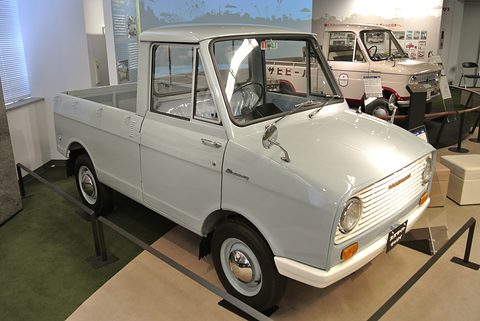
Kei trucks and vans
The four-wheeled kei trucks and vans that replaced Japan’s three-wheelers: Hijet, Sambar, Carry, Minicab, Porter and Honda’s T360
- 1959
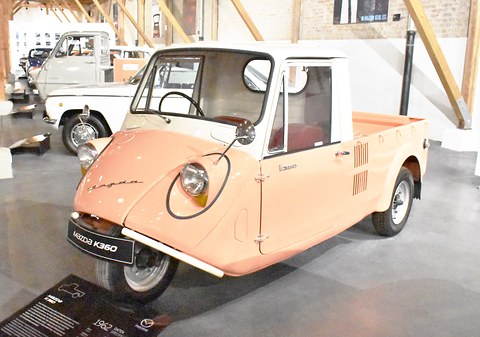
Mazda K360
Mazda’s two-tone kei truck on three wheels: a quiet V-twin behind the cab, a round steering wheel, and Korea’s first three-wheeler under licence
2.98 m - 1959
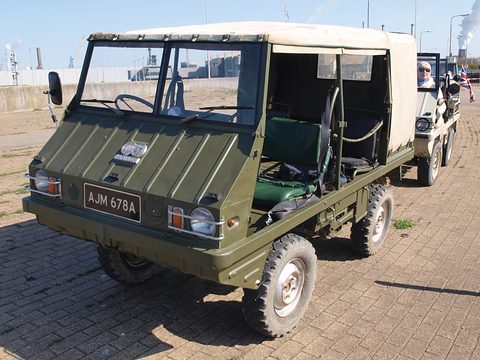
Steyr-Puch Haflinger
Austria’s mountain mule: a 643 cc four-wheel drive under 3 m long that could carry almost its own weight
2.85 m - 1959
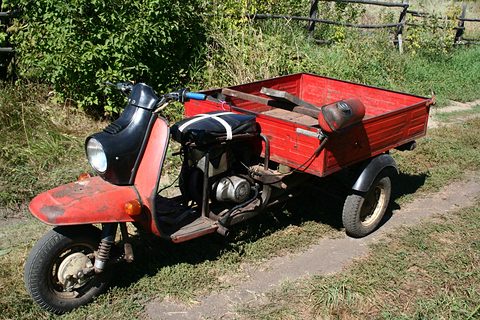
Tula Muravei
The Soviet villager’s pick-up: a Tula scooter with a load platform, built for 36 years
2.88 m - 1960
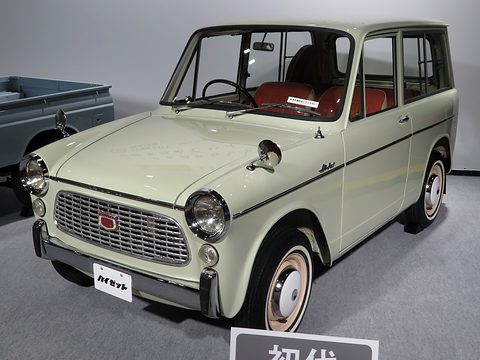
Daihatsu Hijet
Japan’s longest-lived kei name: Daihatsu’s first four-wheeled kei vehicle, from a bonnet truck in 1960 to the cab-overs that carry Japan’s small loads
2.99 m - 1960
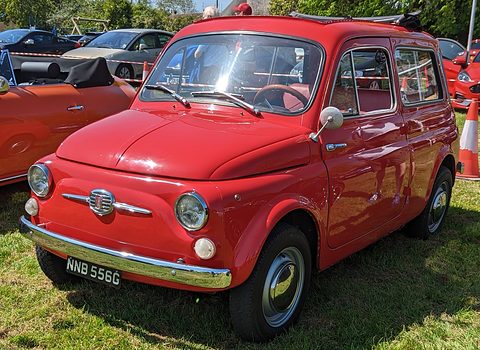
Fiat 500 Giardiniera
The Fiat 500 as an estate: Giacosa laid its twin flat under the floor, and it outlived the saloon by two years
3.19 m - 1960
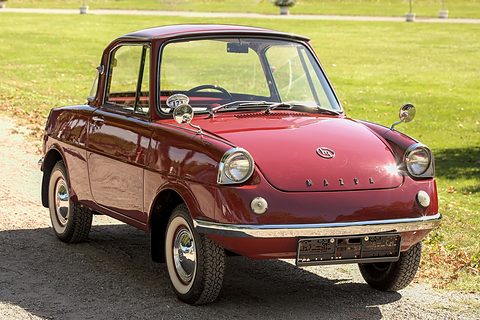
Mazda R360 Coupe
Mazda’s first car: a ¥300,000 coupé of 380 kg with acrylic windows, rubber springs and the first torque-converter automatic in a kei car
2.98 m - 1960
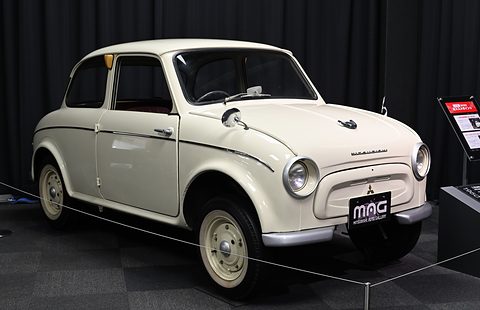
Mitsubishi 500
Mitsubishi’s first car of its own after the war, drawn by aircraft engineers for Japan’s people’s-car plan and tested in a wind tunnel
3.14 m - 1960
Ramses
Egypt’s first car: planned as a British Frisky, built instead on NSU Prinz parts with hand-made bodies beside the Giza pyramids
length unknown - 1961
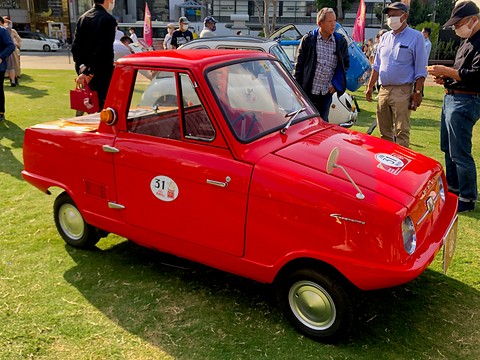
Cony Guppy
A two-pedal pickup a class below the kei trucks, with a 199 cc engine, a walking-stick handbrake and an afterlife as children’s park cars
length unknown - 1961
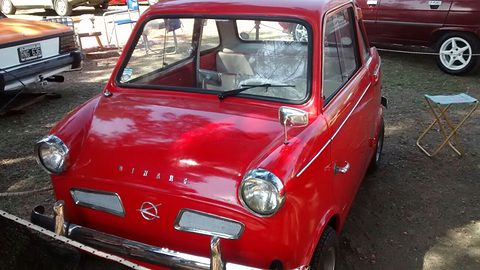
Dinarg D‑200
Argentina’s own glass-fibre microcar from Córdoba, which reversed by starting its two-stroke backwards and so had four speeds in reverse
2.43 m - 1961
Electra King
An enclosed electric golf cart from Long Beach, built for some twenty years with no front brake and a choice of tiller or steering wheel
2.56 m - 1961
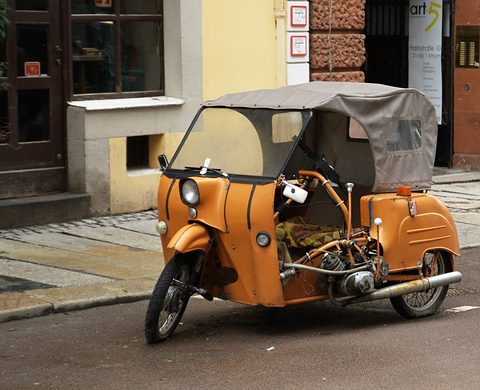
Krause Duo
East Germany’s two-seat invalid tricycle: a Simson moped engine, a fabric hood, and brakes worked by pushing the handlebar
2.13 m - 1961
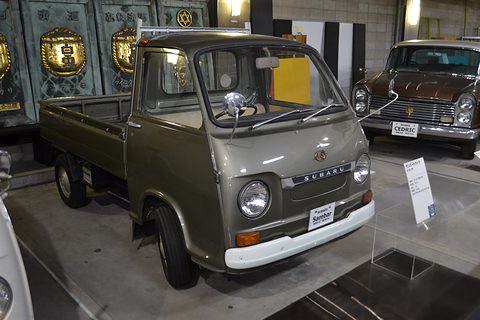
Subaru Sambar
The Subaru 360’s working sibling: a rear-engined kei truck with independent suspension, built by Subaru for 51 years
2.99 m - 1961
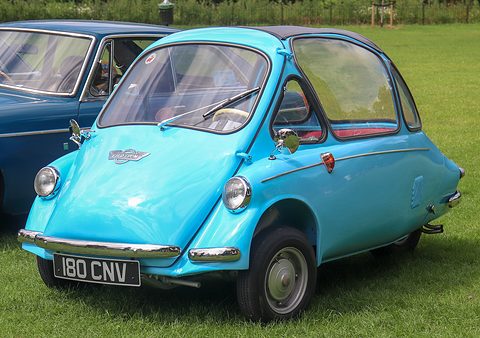
Trojan 200
Ernst Heinkel’s bubble car, built in Croydon by the old Trojan firm for Britain’s Lambretta importer, and killed by the Mini van
2.66 m - 1962
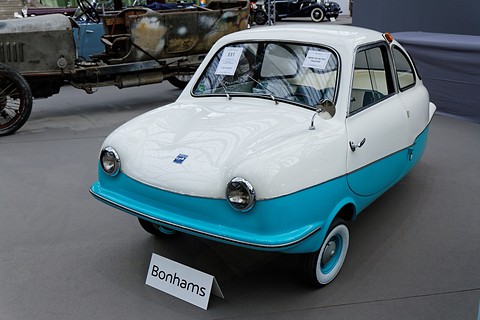
Attica 200
Greece’s licence-built Fuldamobil, made on three wheels because Greek law taxed three-wheelers as motorcycles
length unknown - 1962
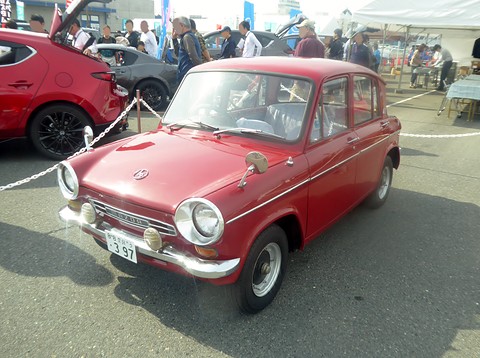
Mazda Carol
A full four-seater behind a backward-raked rear window, with the world’s smallest water-cooled four-cylinder engine in its tail
2.98 m - 1962
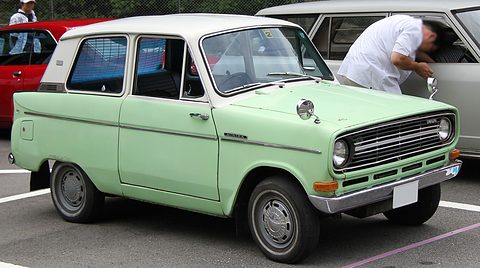
Mitsubishi Minica
Mitsubishi’s first kei car, built off a van with its engine in front: the longest-lived name among kei passenger cars, and the first with a turbo
3.00 m - 1962
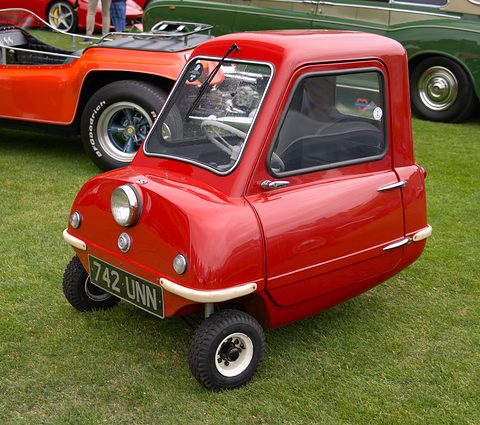
Peel P50
The smallest production car: one seat, one door, one headlight and no reverse gear, built on the Isle of Man
1.37 m - 1963
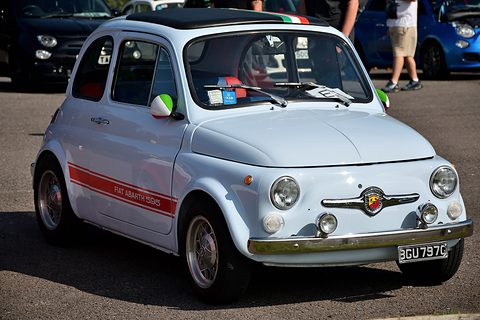
Fiat-Abarth 595 and 695
Carlo Abarth’s Fiat 500s with the engine lid propped open: up to 38 PS, double a standard 500’s, and the scorpion on the tail
2.97 m - 1963
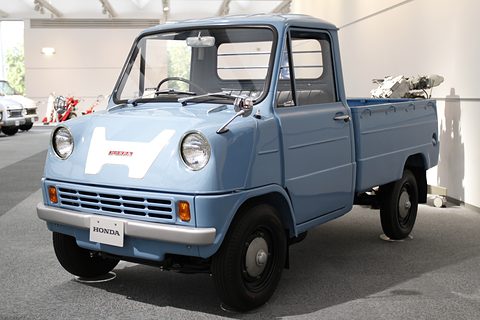
Honda T360
Honda’s first four-wheeler on sale: a kei pickup with a twin-cam, four-carburettor engine making its power at 8,500 rpm
length unknown - 1963
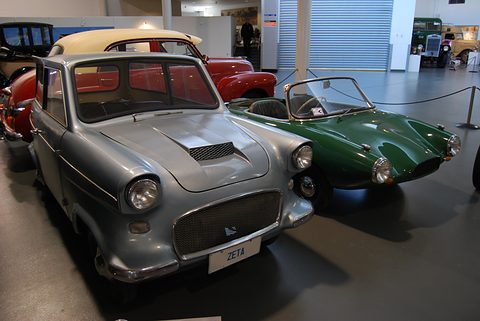
Lightburn Zeta
A cement-mixer maker’s glass-fibre runabout with no reverse gear: to back up, the driver restarted the two-stroke backwards
3.07 m - 1963
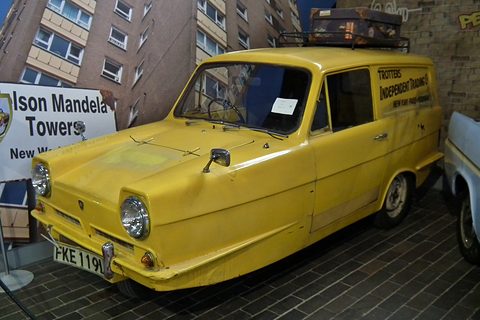
Reliant Supervan
The yellow three-wheeler of Only Fools and Horses and the van Mr Bean keeps knocking over: Reliant’s Supervan, not a Robin
3.43 m
Era 5 of 7 · 1965–1979
Kei cars and voiturettes
Japan’s 360 cc kei box held until 1975, and inside it the makers raced. The Honda N360 of 1967 got 31 PS from a motorcycle twin and set off the horsepower war; the Daihatsu Fellow Max SS of 1970 took it to 40 PS. The box grew to 550 cc in 1976, and in 1979 the Suzuki Alto, a bare van at ¥470,000 that dodged a tax, pulled the class out of its slump.
Britain kept its tax-friendly three-wheelers, from Tom Karen’s tangerine Bond Bug of 1970 to the Reliant Robin of 1973. In France the 50 cc licence-free car, legally an enclosed moped, took off: after the Arola of 1976 about 30 firms took up the idea, by one museum’s count, and the largest, Acoma, maker of the Acoma Mini Comtesse, sold 3,500 cars in 1979. The oil crisis also put electric cars into small series: the CitiCar in Florida and the Zagato Zele in Milan.
- 44 cars
- 2 maker groups
- 3 essential
- Shortest: Minicat, 1.58 m
- 1965
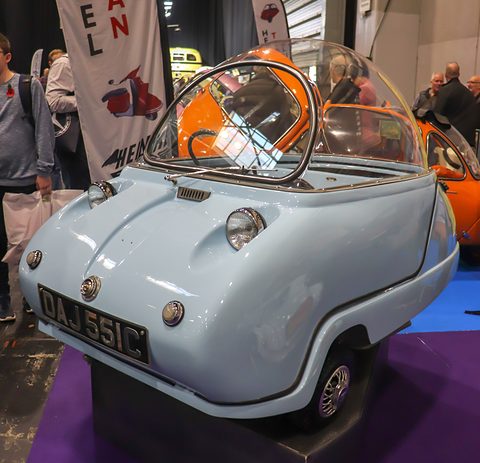
Peel Trident
The P50’s two-seat sibling from the Isle of Man: a glass-fibre tub under a clear dome that lifts up and forward to let you in
1.85 m - 1965
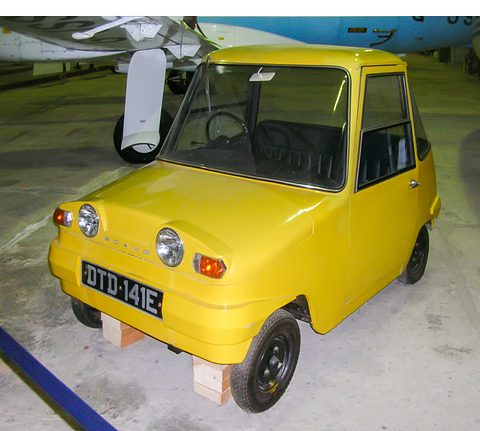
Scottish Aviation Scamp
An aircraft maker’s electric car for the station run, charged overnight from a 13-amp socket, and called unfit for purpose by the Electricity Council in 1968
2.13 m - 1966
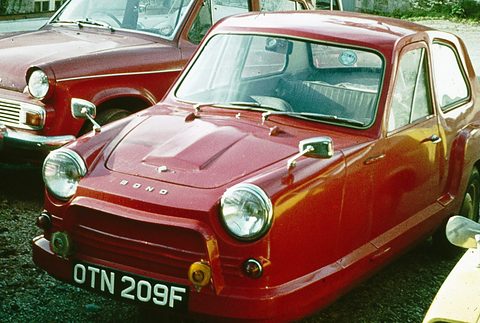
Bond 875
Bond’s rear-engined four-seat three-wheeler with a Hillman Imp engine, quicker than a Mini and kept under 8 cwt for the tax
length unknown - 1966
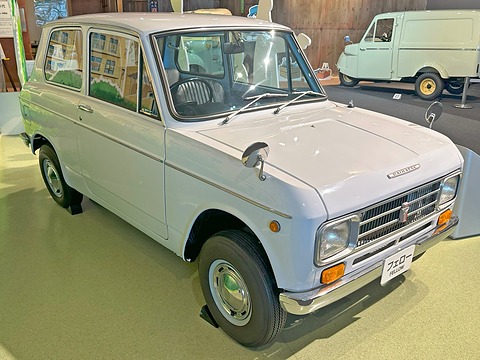
Daihatsu Fellow
Daihatsu’s first kei passenger car: Japan’s first rectangular headlamps, the first kei SS, and a glass-fibre beach buggy
length unknown - 1966
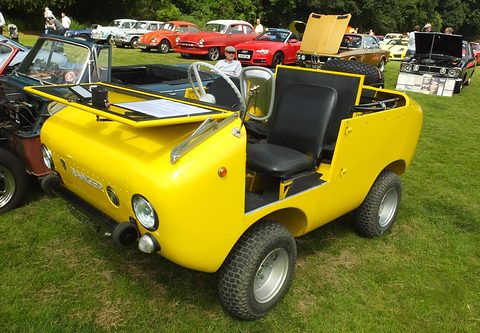
Ferves Ranger
A jeep 2.63 metres long on Fiat 500 and 600 parts, with a crawler gear, a locking differential and, from 1968, four-wheel drive
2.63 m - 1966
Pussycar
An advertising man’s doorless plastic runabout that ended up hired out for fairs, openings and advertising
length unknown - 1967
Ford Comuta
Ford of Britain’s experimental electric town car of 1967: two would park in the space of one Cortina
2.08 m - 1967
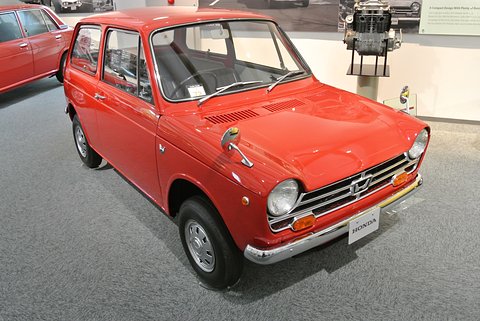
Honda N360
Honda’s first mass-produced passenger car: 31 PS from a motorcycle twin, at ¥313,000, which set off the kei horsepower war
3.00 m - 1967
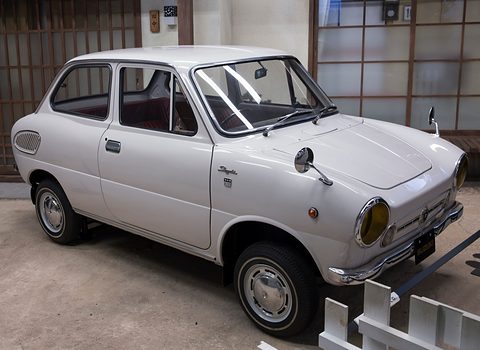
Suzuki Fronte
Suzuki’s three-cylinder kei car: in 1968 Stirling Moss drove one from Milan to Naples at an average of about 122 km/h
3.00 m - 1967
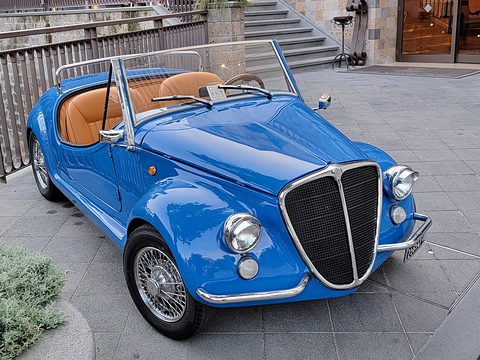
Vignale Gamine
A 1930s roadster in miniature on a 1960s Fiat 500, and the car that helped bring down Carrozzeria Vignale
3.02 m - 1967
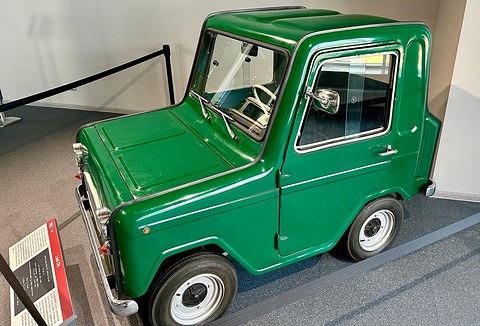
Willam City
A 1.78-metre saloon on Lambretta mechanicals, built so that France’s scooter dealers had a car to sell
1.78 m - 1968
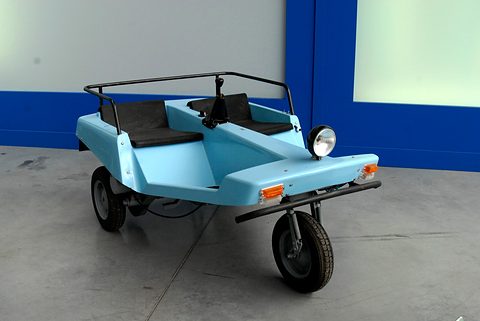
La Voiture Électronique Porquerolles
An open electric tub with no steering wheel: one stick made it go, stop and turn, steering, in the museums’ accounts, by speeding up one rear wheel
1.80 m - 1969
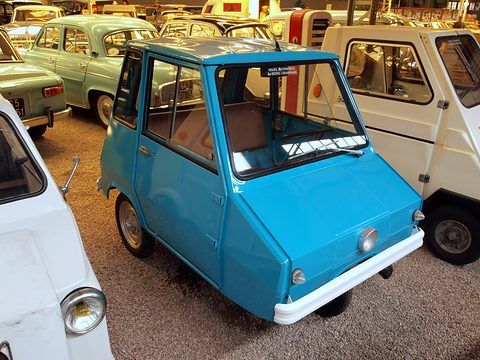
Casalini Sulky
A steel-bodied Italian licence-free car that lasted 25 years, sold in France under the Willam name
1.85 m - 1969
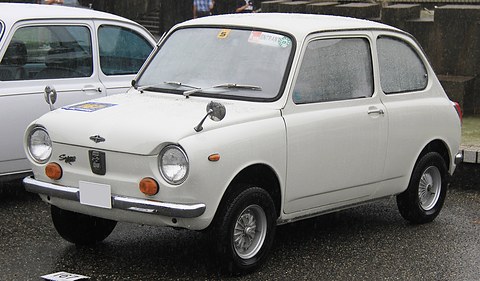
Subaru R‑2
The Subaru 360’s successor: still rear-engined, with a boot in the nose, 30 PS and the Honda N360’s price to the yen
3.00 m - 1970
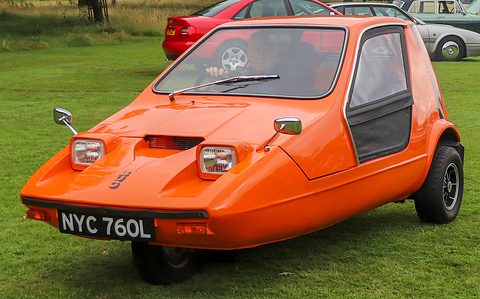
Bond Bug
Tom Karen’s tangerine wedge: a three-wheeler with a tilting canopy instead of doors, and the last car to carry the Bond name
2.79 m - 1970
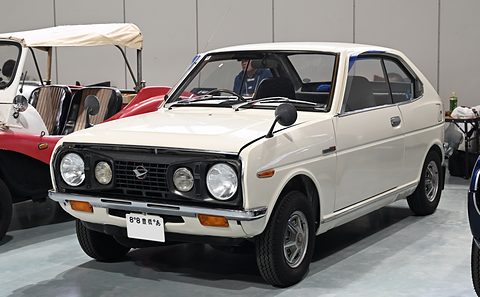
Daihatsu Fellow Max
Daihatsu’s front-wheel-drive kei car, whose SS of 1970 got 40 PS from 360 cc, the peak of the 360 cc power war
3.00 m - 1970
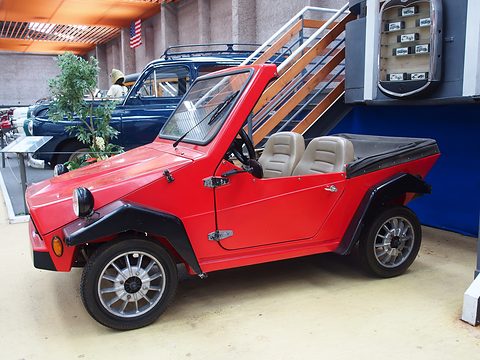
French licence-free car makers of the 1970s and 1980s
Fourteen small French firms that built cars to drive without a licence, from a Limoges metal works to a Wankel-engined runabout
- 1970
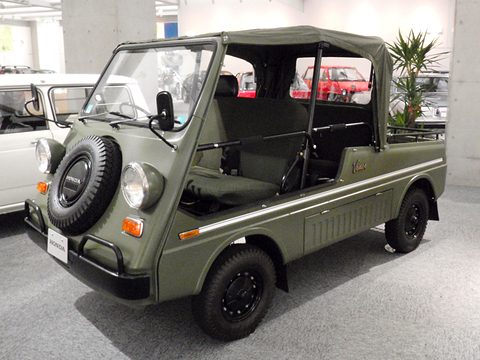
Honda Vamos
Honda’s doorless open kei utility, with rails instead of doors and the spare wheel on its nose as a buffer
3.00 m - 1970
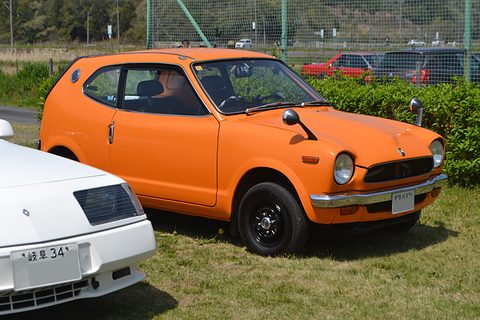
Honda Z
Honda’s kei coupé, whose black-framed glass tailgate Japan nicknamed the diving goggles
3.00 m - 1970
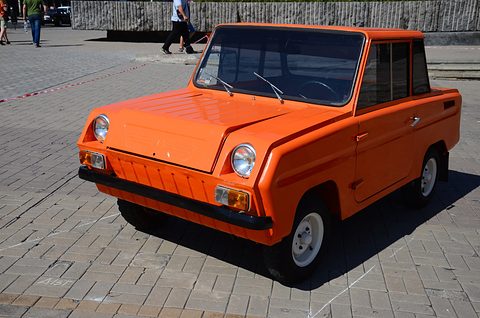
SMZ S‑3D
The boxy steel invalid carriage most Russians picture at the word invalidka, built at Serpukhov for 27 years
2.83 m - 1970
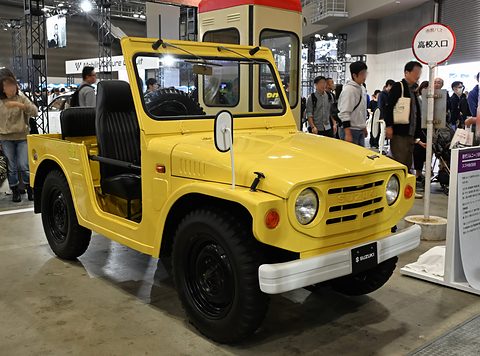
Suzuki Jimny
A failing firm’s kei four-by-four, bought by Suzuki: the only true off-roader in the kei class, and the start of a line still built
3.00 m - 1971
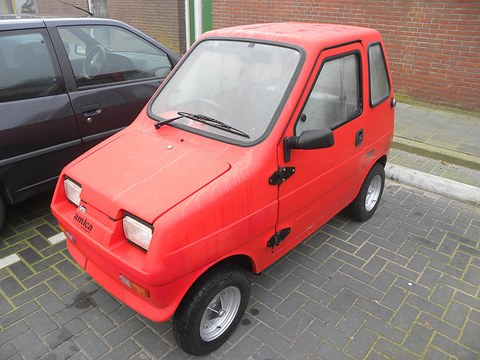
BMA Amica
A two-seat Italian three-wheeler shaped like a dodgem, with canvas gullwing doors you could take off
2.13 m - 1971
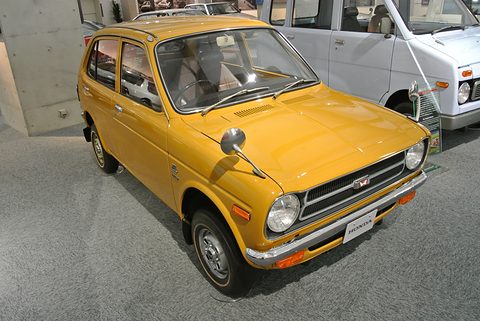
Honda Life
The N360’s water-cooled successor, Honda’s first four-door kei car, and the Step Van that foreshadowed today’s tall kei wagons
length unknown - 1971
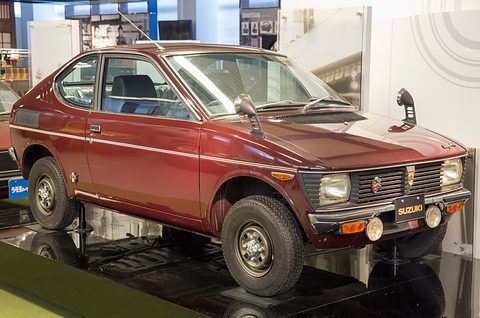
Suzuki Fronte Coupé
A rejected Giugiaro proposal turned into a two-seat wedge: the lowest kei car of its day, with 37 PS from 356 cc
3.00 m - 1972
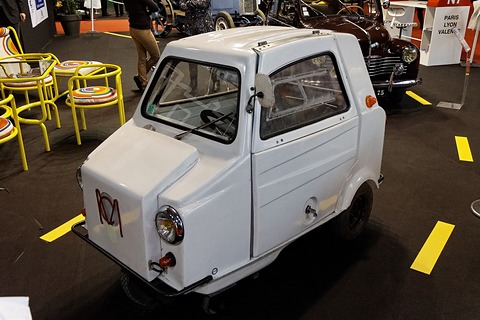
Acoma Mini Comtesse
A one-seat three-wheeler with its engine on the steered front wheel and a different door on each side
1.68 m - 1972
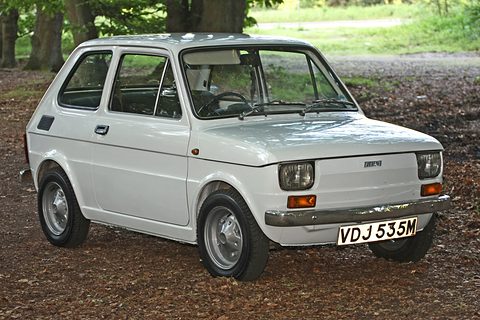
Fiat 126
The Nuova 500’s heir and Fiat’s last rear-engined car, which Poland built for 27 years and named after its nickname, Maluch
3.05 m - 1972
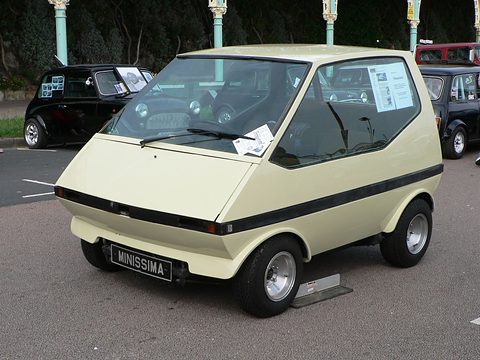
Minissima
William Towns’s Mini replacement with one door at the back, built to park nose to the kerb; it lived on as a car you could drive from a wheelchair
length unknown - 1972
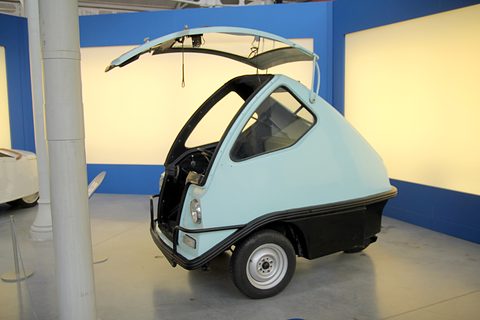
Teilhol Citadine
An electric three-wheeler with an Isetta-style door in its nose, begun when the builder of Renault’s Rodéo lost his licence
2.12 m - 1973
Baldi Frog
A two-seater built from Fiat 500 parts yet shorter than the 500, sold in France as a 125 cc licence-free car
2.15 m - 1973
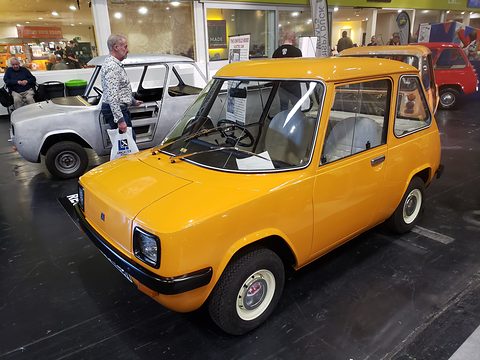
Enfield 8000
The electricity boards’ town car of the first oil crisis: 8 bhp, a real range of 25 miles and a Greek shipowner behind it
2.85 m - 1973
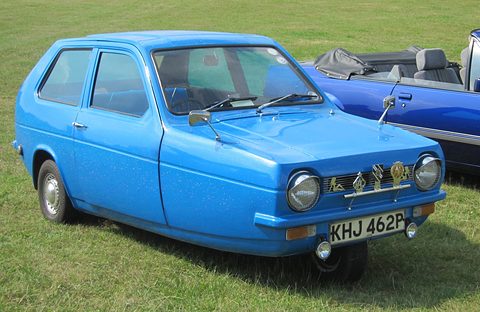
Reliant Robin
Britain’s best-known three-wheeler: four seats, £10 road tax, a motorcycle-licence loophole and a rigged reputation for falling over
3.33 m - 1974
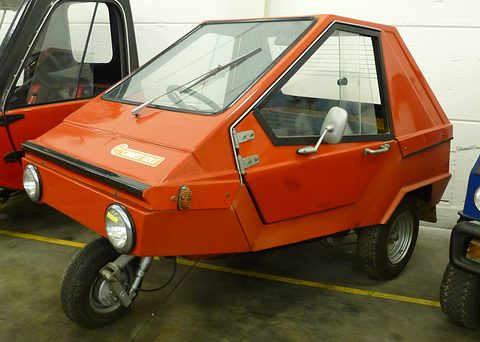
All Cars Snuggy
A beach-buggy maker’s two-seat plastic three-wheeler, with the clutch on one side of the wheel and everything else on the other
2.10 m - 1974
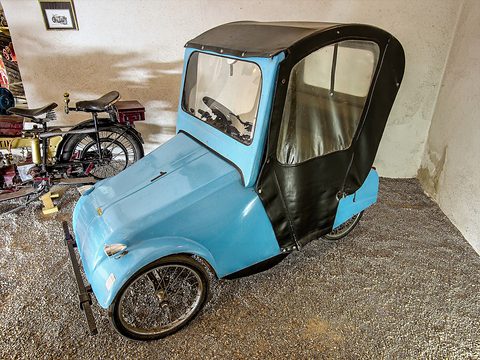
Bellier Véloto
An adult pedal car given a Solex engine, and for years the only licence-free car that could carry two adults
2.10 m - 1974
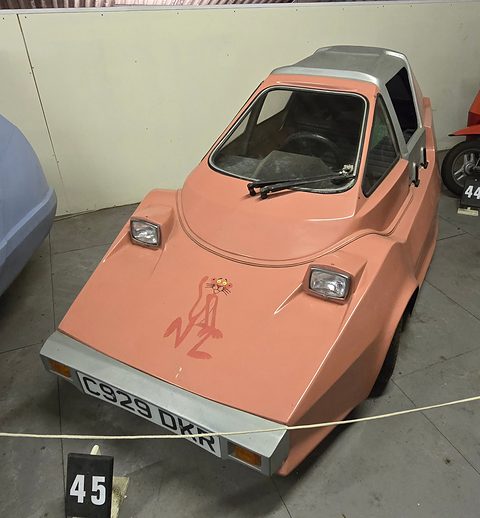
British kit and small-series microcars
Mini- and motorcycle-engined kit cars, most of them three-wheelers, that kept the small British car going from 1974 to 2002
- 1974
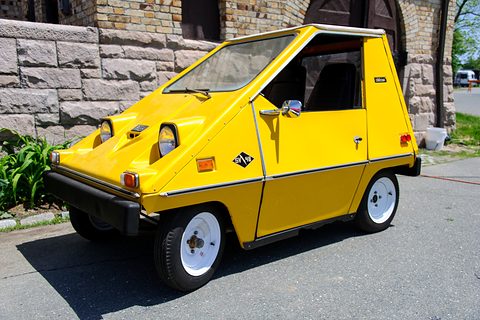
CitiCar
A plastic wedge on golf-cart batteries that made a Florida firm America’s sixth-largest car maker in 1976
2.39 m - 1974
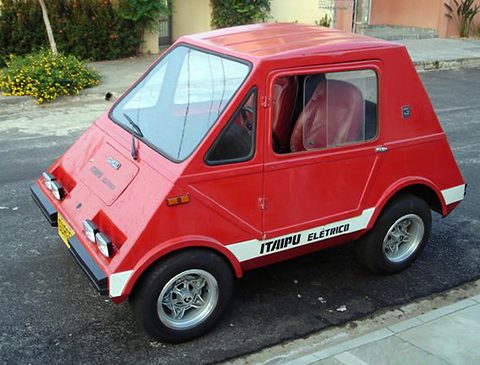
Gurgel Itaipu E150
Latin America’s first electric car, shown in São Paulo after the 1973 oil crisis, with its own parking places and charging posts planned
2.65 m - 1974
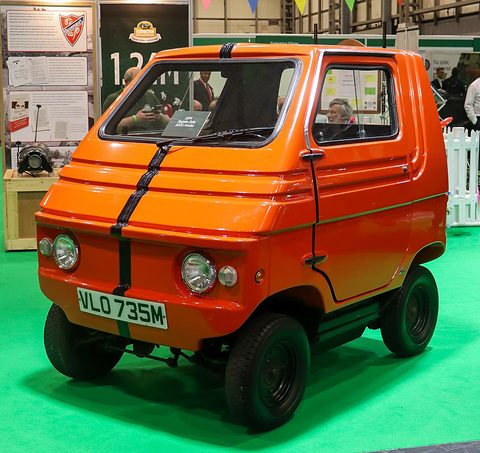
Zagato Zele
A tall plastic box of an electric city car from Milan’s sports-car coachbuilder, put into production by the oil crisis
2.13 m - 1975
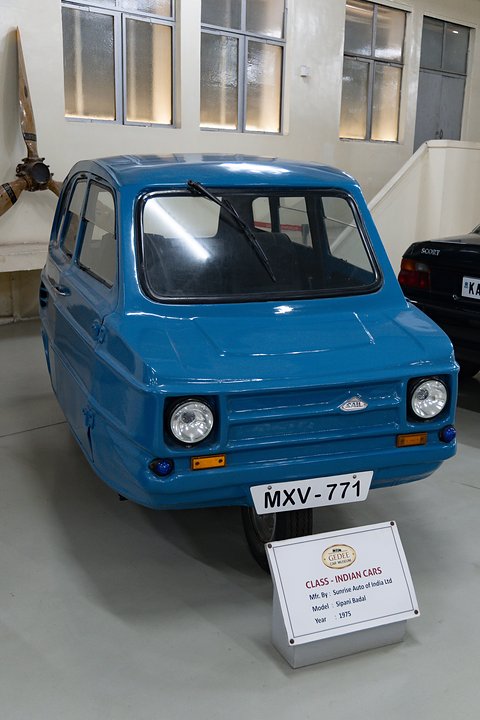
Sipani Badal
India’s first three-wheeled car: an auto-rickshaw dressed as a glass-fibre saloon, with two doors on one side and one on the other
length unknown - 1976
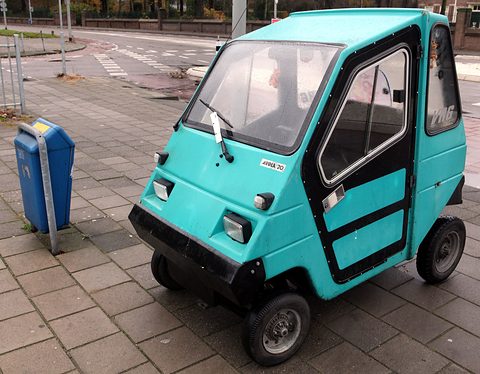
Arola
Handlebars, a backless seat and moped controls in a plastic box: the three-wheeler that became Aixam
1.84 m - 1976
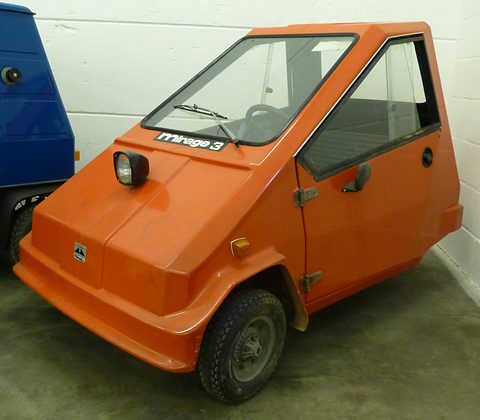
Auto Mirage Mirage 3
A Bologna buggy maker’s 49.9 cc three-wheeler for French buyers, its wheels the other way round from the fashion
2.15 m - 1978
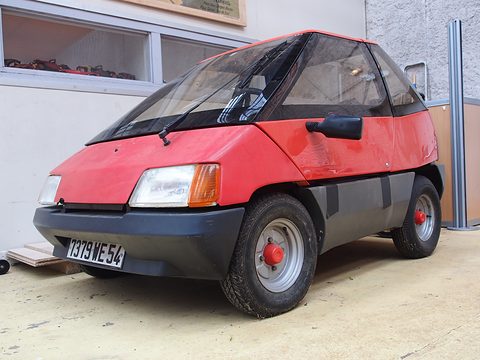
Erad
A Douai garage owner’s spare-time three-wheeler that grew into a factory that built about 30,000 licence-free cars
1.69 m - 1978
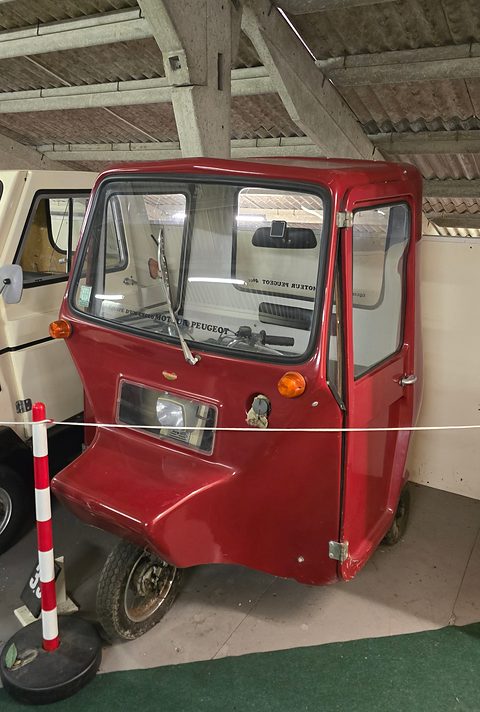
Minicat
A whole Peugeot moped inside a polyester shell, started by pedalling with the car jacked up on its own stand
1.58 m - 1978
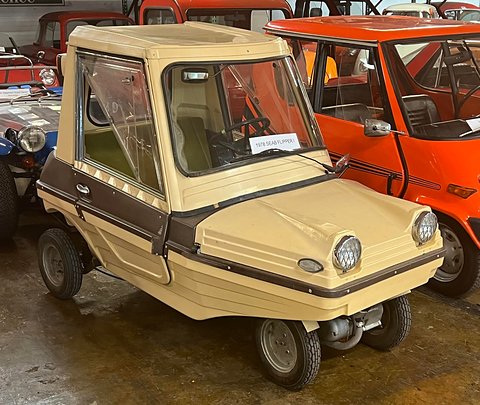
SEAB Flipper
A plastic licence-free box whose front axle swings right round, engine and all, so that it reverses by steering
length unknown - 1979
Delsaux Modulo
A northern French licence-free car whose originality was all in its shape, on the ubiquitous 47 cc Sachs
1.84 m - 1979
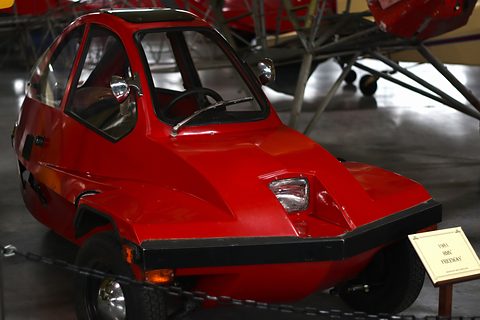
HMV Freeway
One seat, one door, one headlamp and one cylinder: a Minnesota commuter car of 1979 sold with a money-back guarantee of 100 miles per gallon
2.92 m - 1979
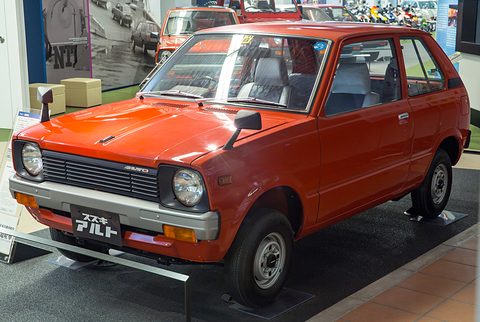
Suzuki Alto
A bare kei van at ¥470,000, the same price all over Japan: it dodged a tax, sold 18,000 a month and pulled the kei class out of its slump
3.19 m
Era 6 of 7 · 1980–1999
Plastic and sans permis
In 1980 industry took over the voiturette. Ligier, the Formula One constructor, built the Ligier JS4 round a cab it made for Renault and sold about 7,000 in 1981; the boat-builder Jeanneau launched the Microcar RJ49. Aixam, reborn in 1983 from the bankrupt Arola, has led the trade since 1987 by its own count, and since 1992 the licence-free car has had a European class of its own, the light quadricycle.
The Sinclair C5, an electric tricycle launched in the snow in January 1985 at £399, was stopped within eight months; Denmark’s CityEl, whose whole glazed top tips forward, lasted about 30 years. Japan’s 660 cc kei rules brought three two-seat sports cars in 1991–92, the ABC kei sports cars, and in October 1998 the Smart Fortwo went on sale: a city car 2.5 m long, the Swatch founder’s idea, built by Mercedes.
- 20 cars
- 6 maker groups
- 1 essential
- Shortest: Sinclair C5, 1.74 m
- 1980
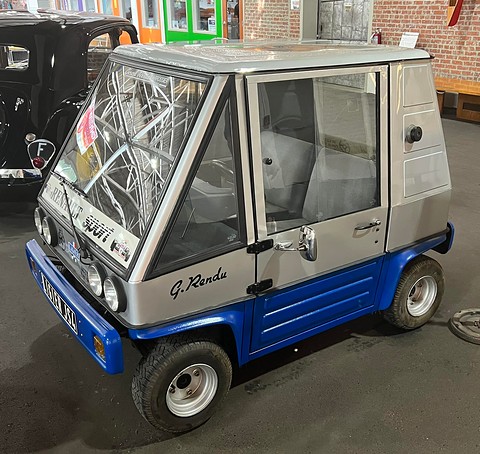
Ligier JS4
A Formula One constructor’s licence-free car, built round a cab Ligier made for Renault
1.97 m - 1980
Microcar RJ49
A yacht builder’s glass-fibre licence-free car, with the Le Mans winner Jean Rondeau as its adviser
length unknown - 1981
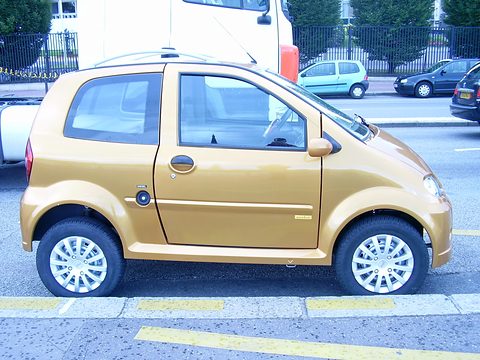
JDM
A licence-free maker from near Angers that was once fourth in Europe and went down with the Heuliez works
length unknown - 1981
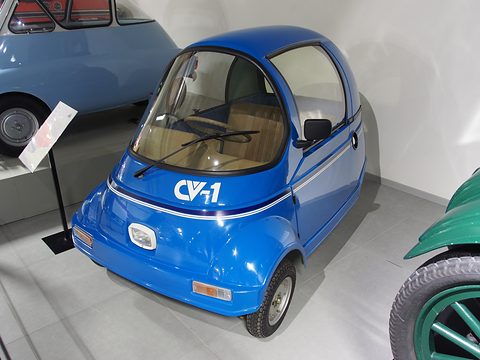
Japanese 50 cc minicars
Single-seat 50 cc cars that could be driven on a moped licence until the law changed on 15 February 1985.
- 1982
Cub Commuter
A glass-fibre three-wheeler built in Taiwan only for Americans, sold in 1982 as cheap to run and cheap to insure
2.31 m - 1982
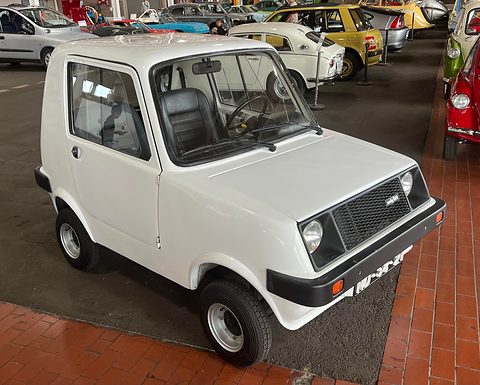
Sado 550
Portugal’s only production microcar: 70 per cent Portuguese, sold out at launch, then killed by its costs
2.37 m - 1983
Arié Hopi
Announced as a licence-free car and named after the Hopi people of Arizona, it arrived with a 125 cc engine that needed a licence
2.32 m - 1984
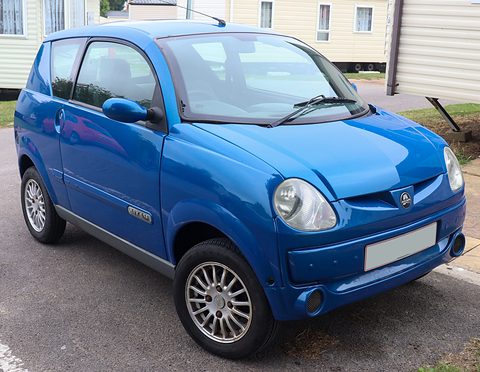
Aixam
The leader of the voiture sans permis since 1987, by its own count, reborn in 1983 from the bankrupt Arola
length unknown - 1984
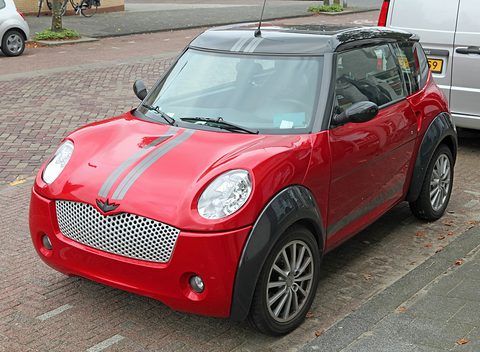
Chatenet
The licence-free car as a small luxury, from a family firm in the Limousin that exports most of what it builds
3.06 m - 1984
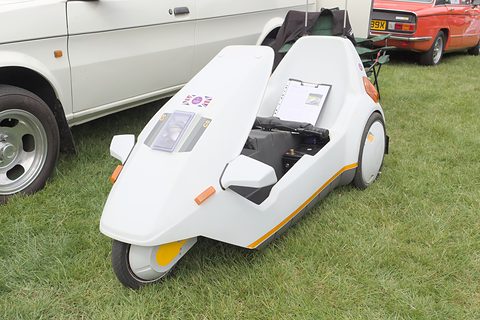
Sinclair C5
Sir Clive Sinclair’s £399 electric tricycle, launched in the snow in 1985 and stopped within eight months
1.74 m - 1987
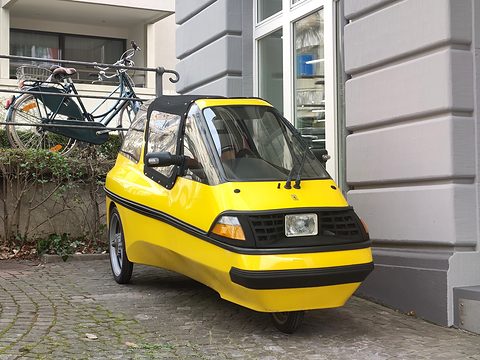
CityEl
A one-seat Danish electric three-wheeler whose whole glazed top tips forward, built from 1987 for about 30 years
2.74 m - 1987
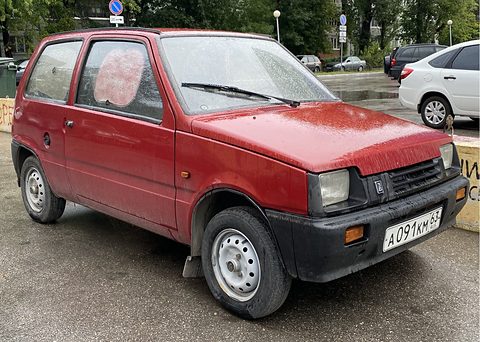
VAZ-1111 Oka
The Soviet Union’s last people’s car: four seats in 3.2 metres, half a Samara engine, and versions to be driven by hand
3.20 m - 1988
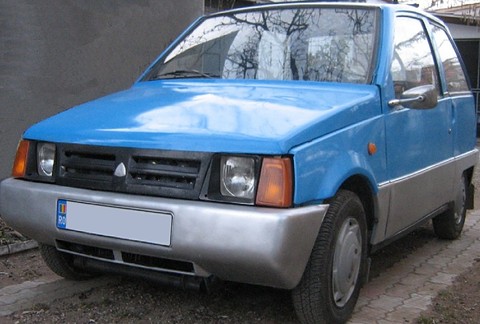
Dacia 500 Lăstun
Romania’s only microcar: Ceaușescu’s people’s car, half an Oltcit engine and a Trabant gearbox, banned from sale in 1990
2.95 m - 1988
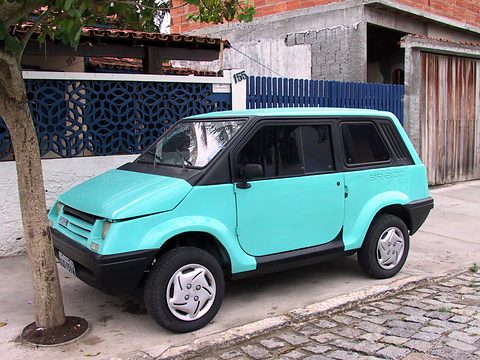
Gurgel BR-800
Brazil’s all-Brazilian small car, with its own water-cooled flat-twin, sold at first only to buyers of the company’s shares
3.19 m - 1991
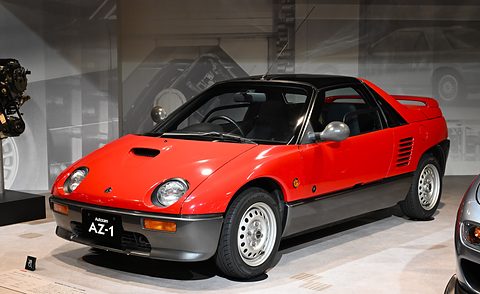
ABC kei sports cars (AZ-1, Beat, Cappuccino)
Three two-seat sports cars built to the very limit of Japan’s kei rules as the bubble burst: a gullwing coupé and two roadsters
- 1991
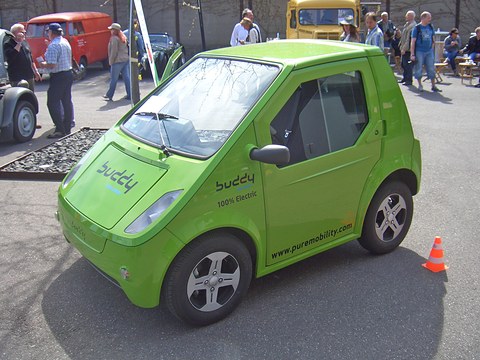
Kewet / Buddy
A Danish electric two-seater of 1991 that found its home in Norway, where the three-seat Buddy filled Oslo’s streets
2.44 m - 1992
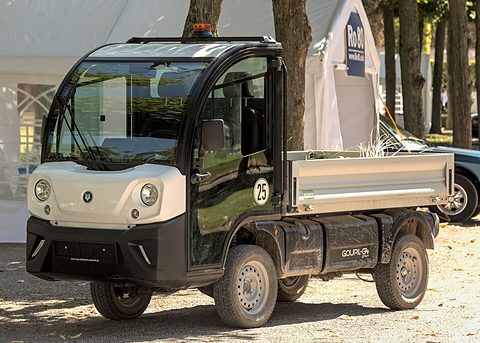
Micro vans and utility microcars since 1990
Narrow electric trucks for old-town streets and parks, from Goupil and Alkè to the cargo versions of the Twizy and the Ami
- 1992
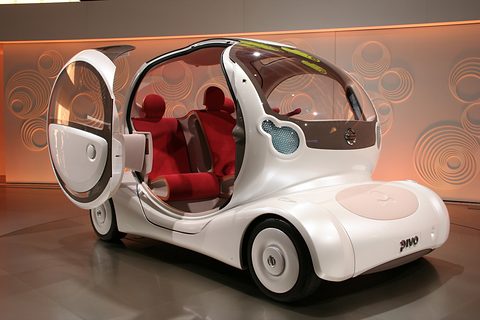
Microcar concept cars since 1990
Show cars that folded, tilted, turned or balanced, from the Renault Zoom of 1992 to the Dacia Hipster of 2025
- 1993
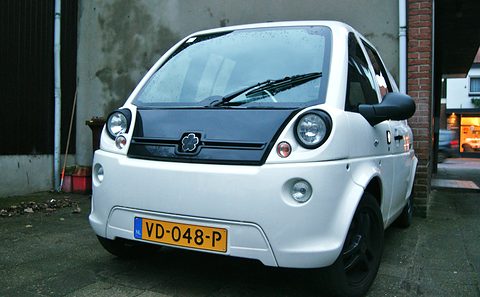
Europe’s small electric microcar makers since 1990
Ten small European electric makers, from the Black Forest’s Hotzenblitz to the Mia, the Birò and the trolley-battery Silence S04
- 1995
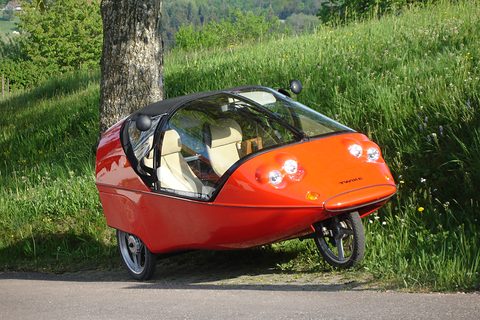
Twike
A Swiss two-seat electric tricycle that its occupants can also pedal, steered by a joystick and built since 1995
2.65 m - 1996
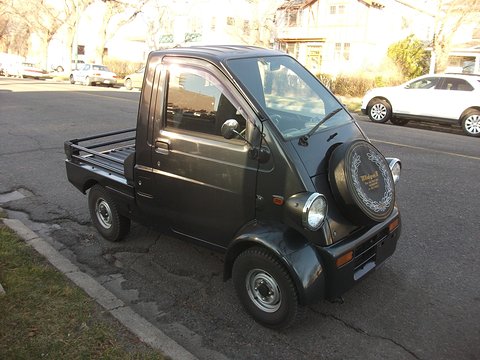
Daihatsu Midget II
A one-seat kei truck with its spare wheel on the nose, built by hand in a workshop of its own from 1996
2.79 m - 1997
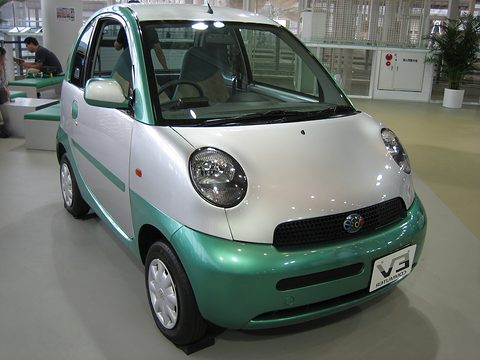
Japan’s ultra-compact mobility and mini-car class
Japan’s smallest cars, from Takeoka’s 50 cc Abbey and Nissan’s Hypermini kei car to the one-seat Mibot of 2025
- 1998
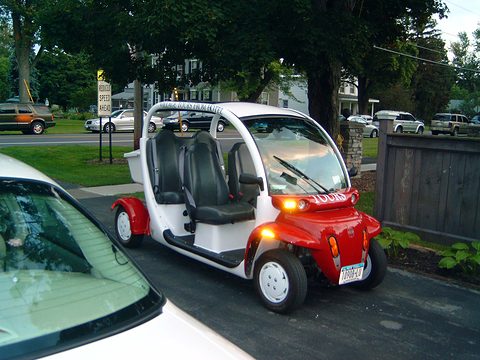
GEM (Global Electric Motorcars)
America’s low-speed electric car: golf-car scale, but legal on streets limited to 56 km/h (35 mph), and over 50,000 sold by 2015
length unknown - 1998
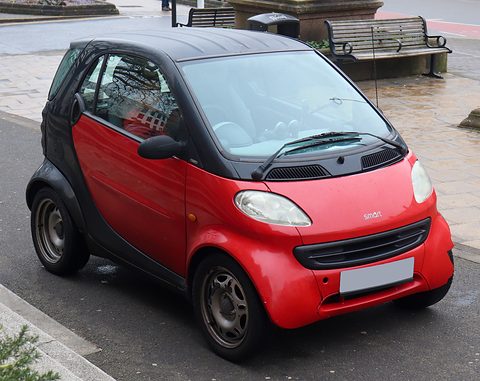
Smart Fortwo
The Swatch boss’s city car that Mercedes built: 2.5 m long, a steel cell on show, and about 2.2 million made in one French factory
2.50 m - 1999
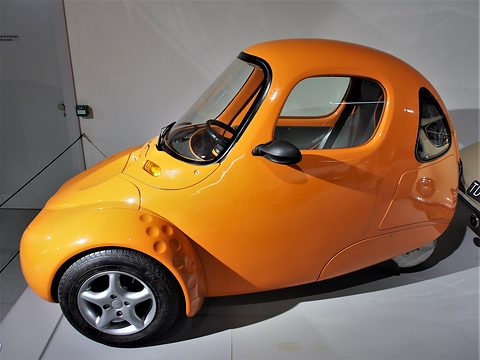
Corbin Sparrow
A one-seat electric three-wheeler fast enough for the freeway, registered as a motorcycle, and about 289 built before its maker went bankrupt
2.44 m - 1999
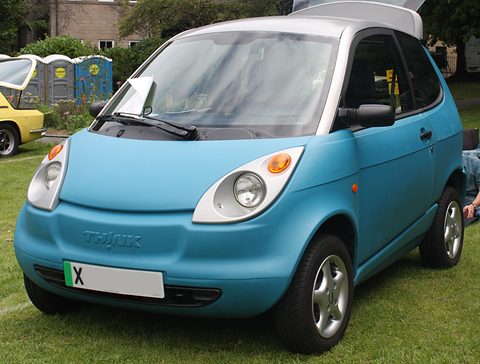
Think City
Norway’s electric city car, bought by Ford for California and then let go, and bankrupt four times in 20 years
length unknown
Era 7 of 7 · 2000–today
Plugged in
London took to the REVA G-Wiz, India’s first production electric car, as a way round the congestion charge, until a crash test in 2007 made it notorious. The big makers built small: the Toyota iQ of 2008 took three adults and a child in under 3 m (9 ft 10 in), Ratan Tata’s one-lakh Tata Nano was meant for families who rode on scooters, and the Renault Twizy, its passenger sitting behind the driver, was Europe’s best-selling plug-in of 2012.
Then the licence-free car went electric. The Citroën Ami of 2020, which a 14-year-old may drive in France, was sold in electrical shops; the Microlino, built in Turin from 2022, brought back the Isetta’s front door; and in China the four-seat Wuling Hongguang Mini EV, 28,800 yuan in 2020, became the country’s best-selling electric car, with more than 1.1 million sold by February 2023. The last Smart Fortwo was built in March 2024.
- 22 cars
- 2 maker groups
- 2 essential
- Shortest: Renault Twizy, 2.32 m
- 2000
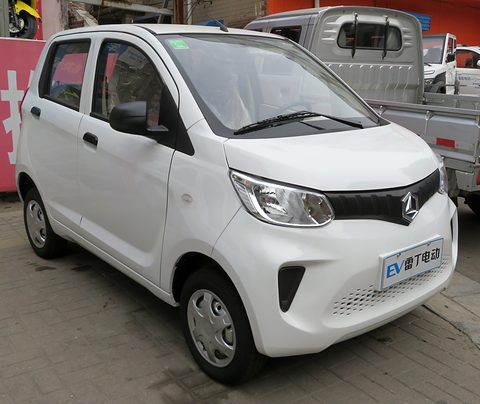
Chinese low-speed electric vehicles
Cheap, slow lead-acid electric cars sold by the hundred thousand in small-town China, where they are called “old folks’ joy”
- 2000
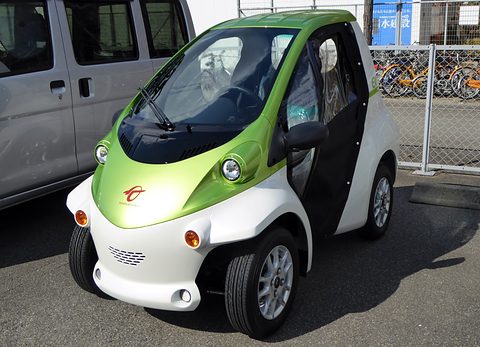
Toyota COMS
Toyota’s one-seat electric delivery car: rated at 0.59 kW to fit Japan’s mini-car rules, with 5 kW on tap
2.40 m - 2001
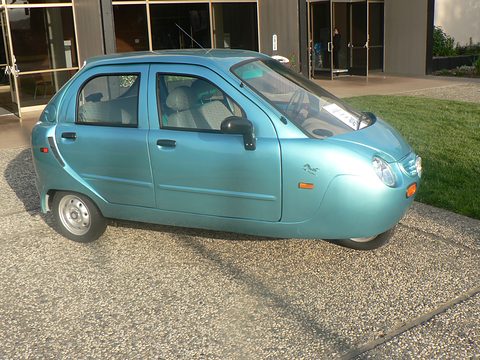
Electric microcars of the Americas since 1990
Small electric cars from the USA, Canada, Mexico, Argentina and Chile, from the Dynasty IT and the ZAP Xebra to Mexico’s Olinia
- 2001
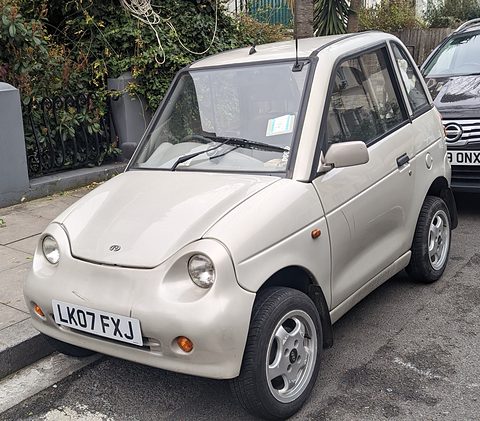
REVA G-Wiz
India’s first production electric car, which became London’s answer to the congestion charge and then a byword for an unsafe car
2.60 m - 2002
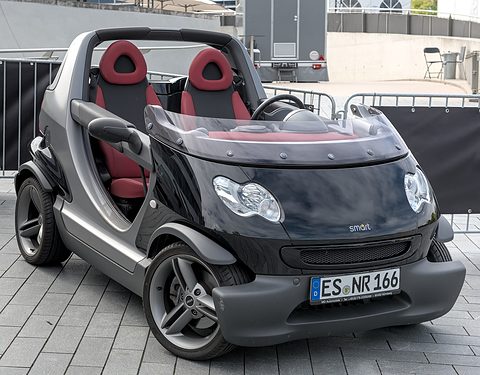
Smart Crossblade
Smart’s 2001 Geneva show car put on sale: a Fortwo with no roof, no doors, barely a windscreen and drains in the floor
length unknown - 2003
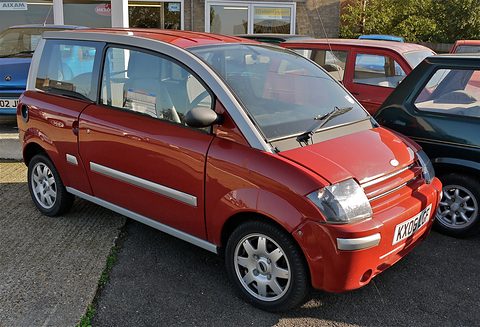
Microcar MC1 and MC2
A boat builder’s angular licence-free car of 2003, with an aluminium frame, plastic panels and, at first, an unpopular bench seat
2.80 m - 2003
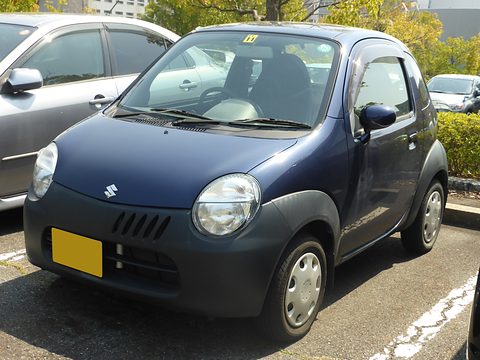
Suzuki Twin
The shortest Japanese kei car of its day, and the first kei car sold as a hybrid, on sixteen lead-acid batteries
2.73 m - 2005
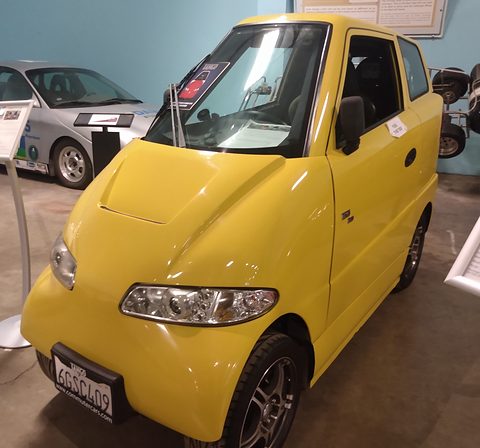
Commuter Cars Tango
A car narrower than a big touring motorcycle, with two seats in tandem, a Prodrive roll cage and a claimed 3.2 seconds to 60 mph
2.59 m - 2008
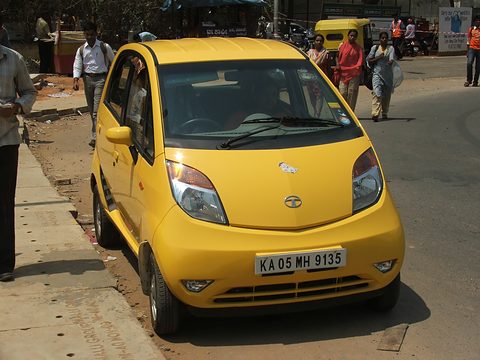
Tata Nano
Ratan Tata’s one-lakh car for families who rode two or three to a scooter: 203,000 bookings in a fortnight, then a slow fade
3.10 m - 2008
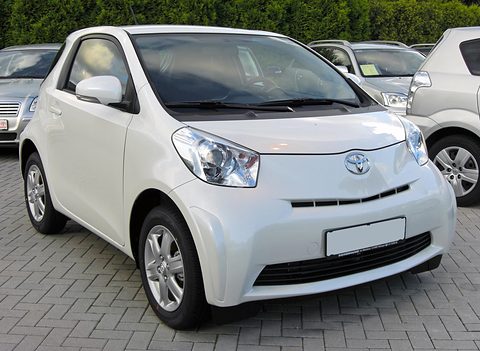
Toyota iQ
Three adults and a child in a car under three metres long, by moving the differential, the steering rack and the air-conditioning out of the way
2.98 m - 2009
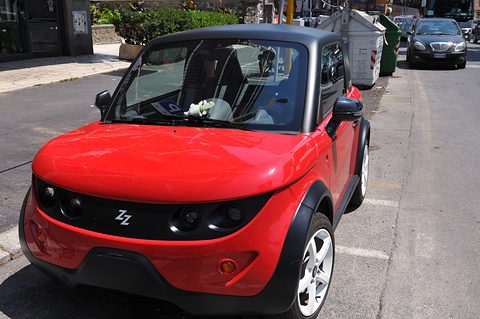
Tazzari Zero
An electric two-seater from an aluminium foundry in Imola, with a cast frame, 100 km/h and a driving mode called Race
2.88 m - 2010
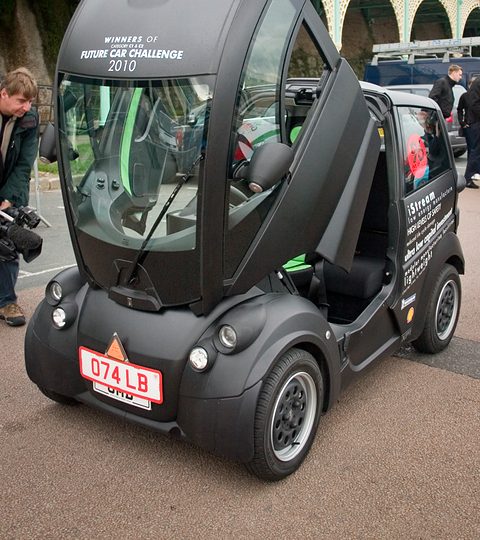
Gordon Murray T.25
The McLaren F1 designer’s three-seat city car, with the driver in the middle, built to sell a new way of making cars
2.40 m - 2011
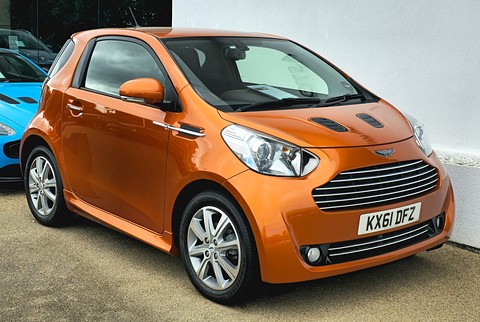
Aston Martin Cygnet
Aston Martin’s £30,000 Toyota iQ, made to lower its fleet’s CO2 average, and one of its shortest-lived models
3.08 m - 2012
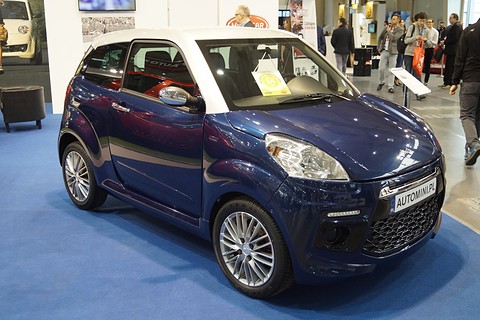
Ligier JS50
The best-seller of Guy Ligier’s licence-free business, and in January 2026 the claimed slowest lap of the Nordschleife
2.83 m - 2012
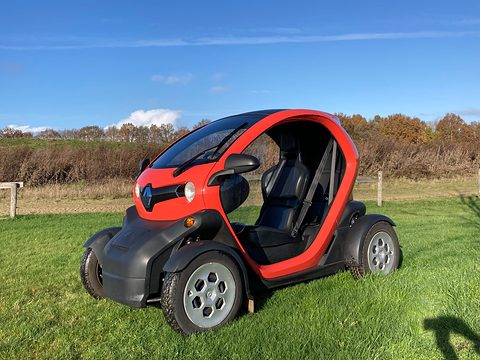
Renault Twizy
A mass-produced electric two-seater with the passenger behind the driver, licence-free in its slowest form, and Europe’s best-selling plug-in of 2012
2.32 m - 2013
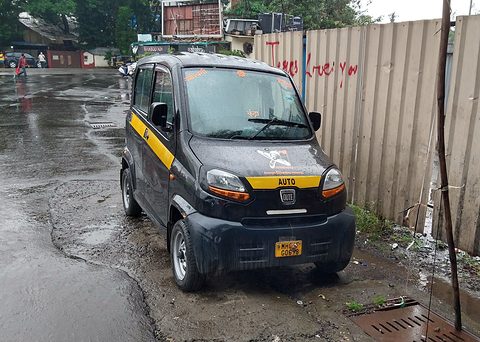
Bajaj Qute
The auto-rickshaw maker’s four-seater, for which India created a legal class and then argued for six years about letting it on the road
2.75 m - 2013
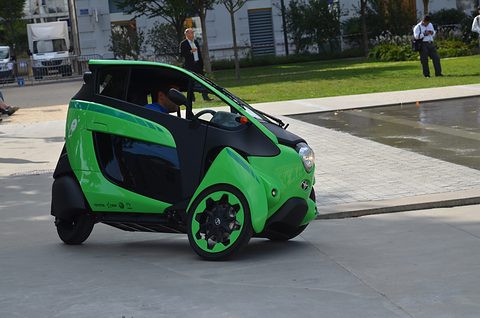
Toyota i-Road
Toyota’s three-wheeler as narrow as a motorcycle, which leans into bends by itself and steers with its back wheel; tried in Tokyo and Grenoble, never sold
2.35 m - 2018
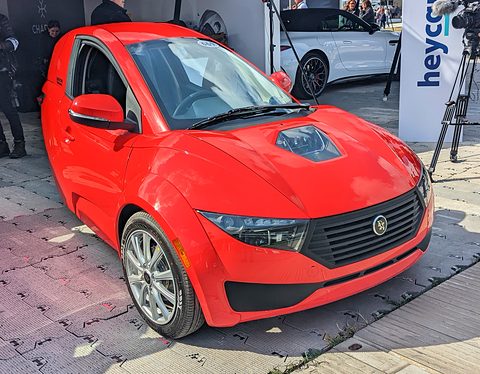
ElectraMeccanica Solo
A one-seat electric three-wheeler for the lone commuter, built in China by a Canadian start-up that ended inside the truck maker Xos
3.10 m - 2019
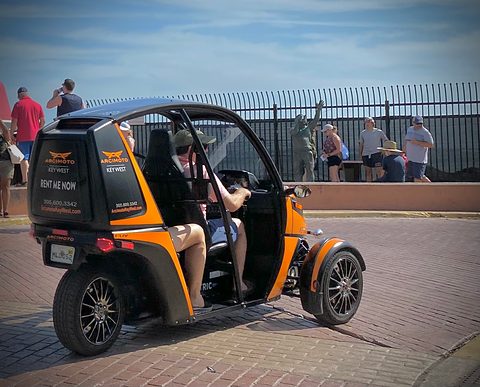
Arcimoto FUV
An Oregon three-wheeler with two seats in tandem, 12 years in the making, whose maker was worth $1.2 billion in 2021 and stopped building it two years later
2.90 m - 2020
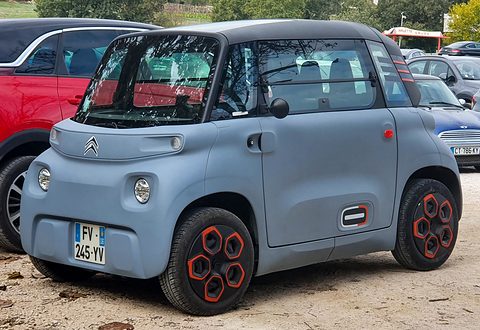
Citroën Ami
A two-seat electric box with the same panel front and back and the same door either side, which a 14-year-old in France may drive, sold in electrical shops
2.41 m - 2020
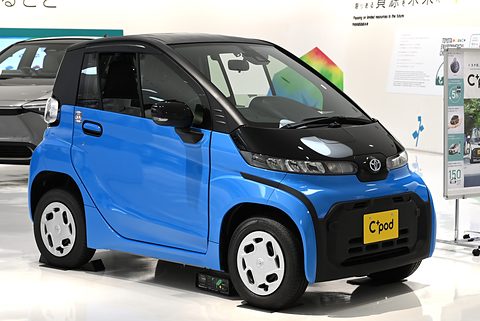
Toyota C+pod
Toyota’s two-seat electric car under Japan’s ultra-compact rules, leased first to councils and companies, with big-car safety electronics
2.49 m - 2020
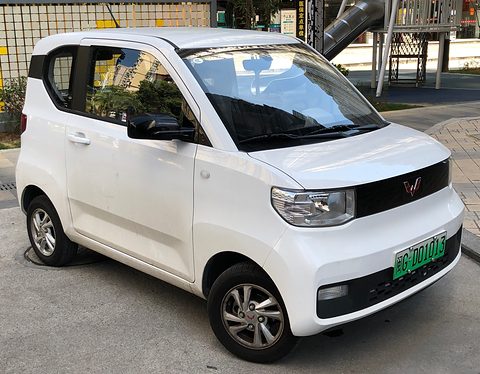
Wuling Hongguang Mini EV
A four-seat electric box for 28,800 yuan in 2020 that became China’s best-selling electric car, and the model for a crowd of imitators
2.92 m - 2022
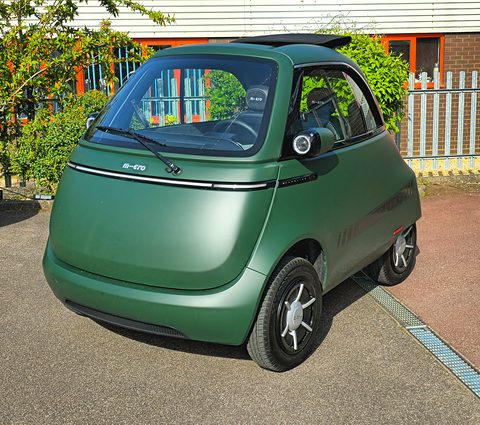
Microlino
The scooter family’s electric Isetta: a front door, a bench for two, more than 500 reservations in two days at Geneva, and a court fight over a near-copy
2.52 m - 2024
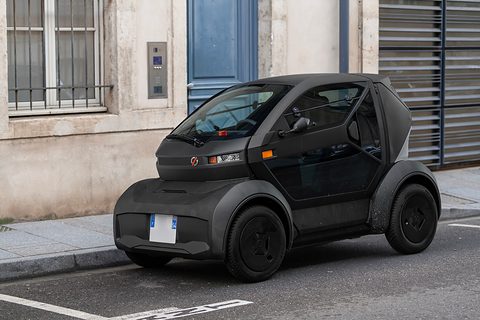
Mobilize Duo
The Twizy’s successor, a closed tandem two-seater licence-free in its slowest form, which Renault stopped after about 3,500 had been built
2.43 m